
Stay Updated with Our Latest Blogs
Subscribe to our blog and get the latest insurance tips, guides, and industry updates delivered to your inbox
Subscribe to our blog and get the latest insurance tips, guides, and industry updates delivered to your inbox
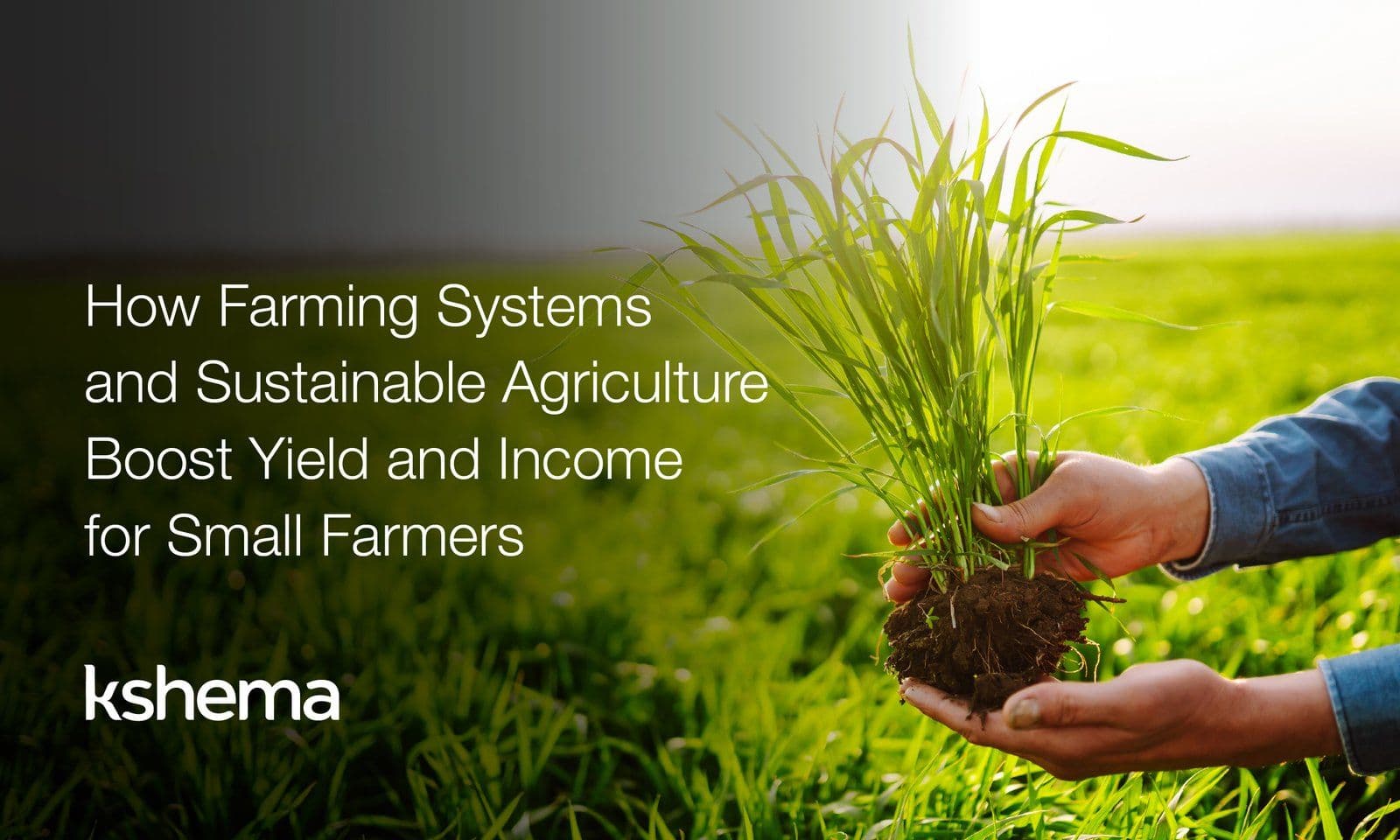
Small-scale farmers are the backbone of India’s agriculture sector, yet they face rising challenges such as unpredictable weather, increasing input costs and limited access to markets. In this situation, adopting a farming system and sustainable agriculture approach becomes essential. This approach views the farm as an interconnected ecosystem that links crops, livestock, soil, water and human effort. By adopting sustainable farming practices and integrated farming systems, smallholders can improve productivity, reduce risks and secure steady incomes. This blog explores how farming system and sustainable agriculture can support farmers and strengthen rural livelihoods.
A farming system and sustainable agriculture approach treats the farm as a living, interconnected ecosystem. It focuses on how crops, livestock, soil, water and labour interact with one another. Instead of targeting high yield from a single crop, the goal is to create a balanced and resilient system that improves overall productivity. Key principles include crop diversification, soil health improvement, efficient water management and community knowledge sharing.
Also Read: Sustainability
The adoption of practices is central to improving yields and reducing costs. These practices are designed to maintain soil fertility, conserve biodiversity, and minimise environmental harm. For small farmers, they offer practical, low-cost solutions that directly boost income. Examples include:
When smallholders adopt sustainable farming practices, they experience healthier soils, reduced expenditure on external inputs and improved yields. This translates into greater profitability and long-term viability.
An integrated farming system combines multiple enterprises — crops, livestock, fisheries, and agroforestry — into a single operation ensuring synergy. This diversification ensures that farmers are not overly dependent on one source of revenue, thereby reducing vulnerability to market or climate shocks. Practical examples include:
By adopting an integrated farming system, smallholders can maximise resource use, spread risks, and stabilise income. It is a model that reflects the essence of farming system and sustainable agriculture in action.
The financial advantages of farming system and sustainable agriculture are significant. Small farmers often operate on tight margins, so strategies that reduce costs and increase returns are invaluable. Economic benefits include:
These benefits demonstrate that farming system and sustainable agriculture is not merely an environmental necessity but also a viable economic strategy for smallholders.
Across Asia, Africa, and Latin America, small farmers have successfully adopted farming system and sustainable agriculture models.
These examples highlight how farming system and sustainable agriculture can be tailored to local contexts, offering scalable solutions for smallholders worldwide.
While individual farmers can achieve remarkable results, broader adoption of farming system and sustainable agriculture requires supportive policies. Governments, NGOs, and international agencies play a crucial role in scaling up these practices.
Key policy measures include:
By aligning policy frameworks with farmer needs, the potential of farming system and sustainable agriculture can be fully realised.
The adoption of practices is central to improving yields and reducing costs. These practices are designed to maintain soil fertility, conserve biodiversity, and minimise environmental harm. For small farmers, they offer practical, low-cost solutions that directly boost income. Examples include:
When smallholders adopt sustainable farming practices, they experience healthier soils, reduced expenditure on external inputs and improved yields. This translates into greater profitability and long-term viability.
An integrated farming system combines multiple enterprises — crops, livestock, fisheries, and agroforestry — into a single operation ensuring synergy. This diversification ensures that farmers are not overly dependent on one source of revenue, thereby reducing vulnerability to market or climate shocks. Practical examples include:
By adopting an integrated farming system, smallholders can maximise resource use, spread risks, and stabilise income. It is a model that reflects the essence of farming system and sustainable agriculture in action.
The financial advantages of farming system and sustainable agriculture are significant. Small farmers often operate on tight margins, so strategies that reduce costs and increase returns are invaluable. Economic benefits include:
These benefits demonstrate that farming system and sustainable agriculture is not merely an environmental necessity but also a viable economic strategy for smallholders.
Across Asia, Africa, and Latin America, small farmers have successfully adopted farming system and sustainable agriculture models.
These examples highlight how farming system and sustainable agriculture can be tailored to local contexts, offering scalable solutions for smallholders worldwide.
While individual farmers can achieve remarkable results, broader adoption of farming system and sustainable agriculture requires supportive policies. Governments, NGOs, and international agencies play a crucial role in scaling up these practices.
Key policy measures include:
By aligning policy frameworks with farmer needs, the potential of farming system and sustainable agriculture can be fully realised.
Farming system and sustainable agriculture offer small farmers a practical way to improve productivity, reduce risks and increase income. By adopting sustainable farming practices and integrated farming systems, they can strengthen resilience against climate shocks and market fluctuations. This approach enhances soil health, diversifies income and supports long‑term livelihood stability. Ultimately, farming system and sustainable agriculture provide a strong pathway towards sustainable prosperity and a secure future for rural communities.
A farming system integrates crops, livestock, soil and water to create a balanced and resilient ecosystem. It focuses on long‑term sustainability, efficient resource use and improved farm income.
It reduces input costs, improves soil fertility, conserves water and increases productivity. This helps farmers earn more while protecting their land for future generations.
Organic composting, agroforestry, crop rotation, conservation tillage, mulching and integrated pest management.
It diversifies income, spreads risks, maximises resource use and increases stability even during climate or market challenges.
Yes. It reduces costs, improves yields, provides premium market opportunities and adds income streams through diversification.
A farming system integrates crops, livestock, soil and water to create a balanced and resilient ecosystem. It focuses on long‑term sustainability, efficient resource use and improved farm income.
It reduces input costs, improves soil fertility, conserves water and increases productivity. This helps farmers earn more while protecting their land for future generations.
Organic composting, agroforestry, crop rotation, conservation tillage, mulching and integrated pest management.
It diversifies income, spreads risks, maximises resource use and increases stability even during climate or market challenges.
Yes. It reduces costs, improves yields, provides premium market opportunities and adds income streams through diversification.
“We do not assume any liability for any actions undertaken based on the information provided here. The information gathered from various sources and are displayed here for general guidance and does not constitute any professional advice or warranty of any kind.”
Crop Insurance