
Stay Updated with Our Latest Blogs
Subscribe to our blog and get the latest insurance tips, guides, and industry updates delivered to your inbox
Subscribe to our blog and get the latest insurance tips, guides, and industry updates delivered to your inbox
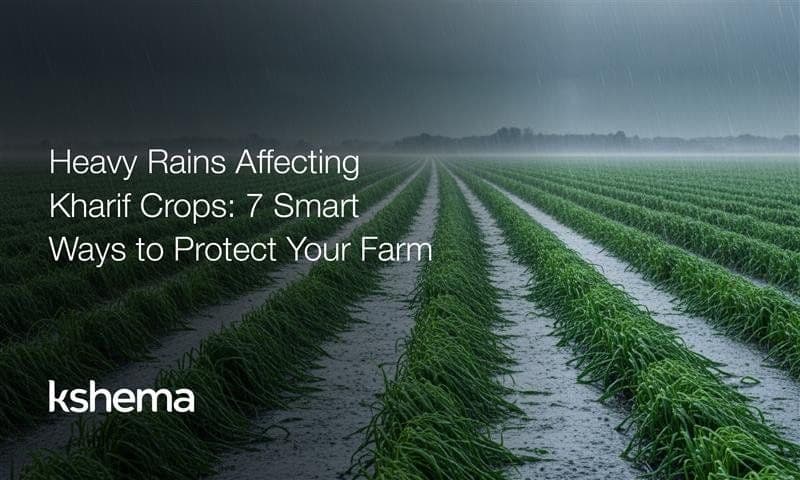
Heavy rains affecting Kharif crops have become a significant challenge for farmers across India. While monsoon rains are essential for a successful harvest, excessive and prolonged rainfall can lead to waterlogging, pest outbreaks, fungal diseases, and substantial yield losses in key Kharif crops such as paddy, maize, soybean, cotton, and pulses.
In the face of increasingly erratic weather patterns driven by climate change, it is crucial for farmers to adopt proactive measures to safeguard their crops and livelihoods. Here are seven practical and effective ways to protect your farm during heavy rains. Additionally, we explore how Kshema General Insurance provides a vital safety net to help farmers mitigate financial risks due to adverse weather conditions.
Excess water caused by heavy rains leads to waterlogging, which can suffocate plant roots and reduce oxygen availability, causing root rot and stunted growth. Proper drainage is, therefore, vital to protect Kharif crops
Farmers should:
Effective drainage ensures that crops are not exposed to prolonged waterlogging, which can severely impact the health and yield of Kharif crops
Seed selection is crucial when dealing with heavy rains. Opting for flood-tolerant or short-duration crop varieties can reduce damage and increase the likelihood of a successful harvest. For example:
Consult your local agricultural extension office for guidance on the best Kharif crops suited to your region’s rainfall and flooding risk.
Adjusting sowing dates can help mitigate damage caused by heavy rains. Early sowing, before the peak monsoon, allows plants to establish stronger root systems, enhancing their resilience against excess water. Staggered planting — sowing the same crop at intervals — helps spread risk. It ensures that all plants do not reach vulnerable growth stages simultaneously, thereby minimising the impact of any adverse weather.
Healthy soil plays a crucial role in absorbing and retaining water, reducing runoff and soil erosion during heavy rains. Enhancing soil organic matter improves its structure and microbial activity, which supports healthy root growth. Farmers should:
Strong soil health directly contributes to the resilience of Kharif crops against heavy rainfall.
Heavy rains create a favourable environment for pests and diseases that threaten Kharif crops. Common issues include:
Regular field inspection is critical. At the first signs of infestation or infection, apply recommended fungicides or bio-control agents promptly. Proper drainage and field sanitation post-rainfall also reduce disease spread.
Mulching with organic materials such as straw or crop residues helps regulate soil temperature, reduce water evaporation, and prevent erosion caused by heavy rains. Mulching also minimises the direct impact of raindrops on tender roots, especially in vegetable Kharif crops. As the mulch decomposes, it enriches the soil with nutrients, promoting healthier crops post-monsoon.
Despite all precautions, nature’s fury can cause unexpected damage. Crop insurance is a vital tool for managing financial risk. Kshema General Insurance offers tailored crop insurance policies designed specifically for the needs of Indian farmers growing Kharif crops.
Excess water caused by heavy rains leads to waterlogging, which can suffocate plant roots and reduce oxygen availability, causing root rot and stunted growth. Proper drainage is, therefore, vital to protect Kharif crops
Farmers should:
Effective drainage ensures that crops are not exposed to prolonged waterlogging, which can severely impact the health and yield of Kharif crops
Seed selection is crucial when dealing with heavy rains. Opting for flood-tolerant or short-duration crop varieties can reduce damage and increase the likelihood of a successful harvest. For example:
Consult your local agricultural extension office for guidance on the best Kharif crops suited to your region’s rainfall and flooding risk.
Adjusting sowing dates can help mitigate damage caused by heavy rains. Early sowing, before the peak monsoon, allows plants to establish stronger root systems, enhancing their resilience against excess water. Staggered planting — sowing the same crop at intervals — helps spread risk. It ensures that all plants do not reach vulnerable growth stages simultaneously, thereby minimising the impact of any adverse weather.
Healthy soil plays a crucial role in absorbing and retaining water, reducing runoff and soil erosion during heavy rains. Enhancing soil organic matter improves its structure and microbial activity, which supports healthy root growth. Farmers should:
Strong soil health directly contributes to the resilience of Kharif crops against heavy rainfall.
Heavy rains create a favourable environment for pests and diseases that threaten Kharif crops. Common issues include:
Regular field inspection is critical. At the first signs of infestation or infection, apply recommended fungicides or bio-control agents promptly. Proper drainage and field sanitation post-rainfall also reduce disease spread.
Mulching with organic materials such as straw or crop residues helps regulate soil temperature, reduce water evaporation, and prevent erosion caused by heavy rains. Mulching also minimises the direct impact of raindrops on tender roots, especially in vegetable Kharif crops. As the mulch decomposes, it enriches the soil with nutrients, promoting healthier crops post-monsoon.
Despite all precautions, nature’s fury can cause unexpected damage. Crop insurance is a vital tool for managing financial risk. Kshema General Insurance offers tailored crop insurance policies designed specifically for the needs of Indian farmers growing Kharif crops.
With Kshema’s crop insurance, farmers gain peace of mind and protection against the unpredictability of weather.
Heavy rains affecting Kharif crops remain a formidable challenge for Indian farmers. However, by implementing practical measures such as improving drainage, selecting resilient crop varieties, adjusting sowing times, maintaining soil health, managing pests, and mulching, farmers can significantly reduce the risk of crop loss. Most importantly, partnering with Kshema General Insurance ensures that farmers are financially protected if unexpected or heavy rains cause damage. With expert advice and dependable insurance cover, Kshema supports farmers in securing their livelihoods through the unpredictable monsoon seasons. For more information about how Kshema can help protect your Kharif crops and farm income, visit kshema.co today.
Heavy rains damage crops by flooding fields, eroding soil nutrients, and increasing pest and disease outbreaks, leading to reduced yields.
Farmers can protect crops from heavy rain by improving drainage, using raised beds, mulching, and adopting resistant crop varieties.
Farmers can access government schemes like
Heavy rains damage crops by flooding fields, eroding soil nutrients, and increasing pest and disease outbreaks, leading to reduced yields.
Farmers can protect crops from heavy rain by improving drainage, using raised beds, mulching, and adopting resistant crop varieties.
Farmers can access government schemes like
“We do not assume any liability for any actions undertaken based on the information provided here. The information gathered from various sources and are displayed here for general guidance and does not constitute any professional advice or warranty of any kind.”
Crop Insurance