
Stay Updated with Our Latest Blogs
Subscribe to our blog and get the latest insurance tips, guides, and industry updates delivered to your inbox
Subscribe to our blog and get the latest insurance tips, guides, and industry updates delivered to your inbox
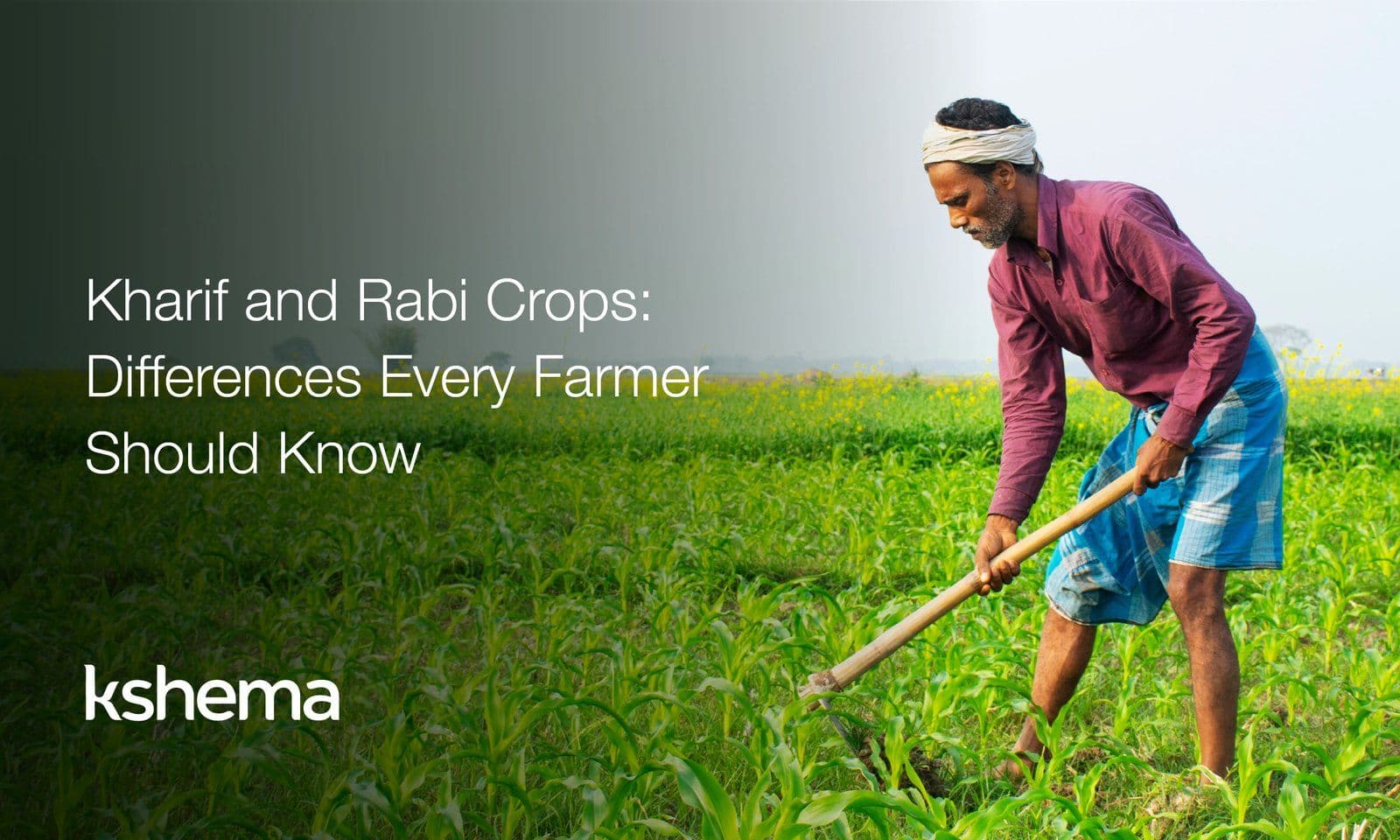
Kharif and Rabi crops are two main crop seasons in India.
Kharif crops are grown during the monsoon season (June–October), while Rabi crops are grown in the winter season (October–March). They differ in sowing time, harvesting period, water needs, and crop types.
See how PMFBY crop insurance works for Kharif and Rabi seasons and when claims can be filed.
Kharif vs Rabi Crops
Rabi crops are grown in the winter season. They are usually sown from October to December and harvested from March to April (months can vary by crop and region).
Note: months can vary slightly by crop and region.
Kharif crops are grown during the monsoon season. They rely heavily on rainfall and warm, humid weather. Rabi crops are grown after the monsoon ends, during winter. They need cool, dry weather and often depend more on irrigation.
Paddy (rice), maize, cotton, millets (bajra/jowar), groundnut, soybean, tur (arhar), urad, moong, sugarcane.
Wheat, barley, mustard, peas, gram (chickpea), lentil (masoor), oats, and region-specific vegetables in some areas.
Kharif and Rabi refer to India’s two main cropping seasons. Kharif crops are usually grown with the arrival of the monsoon, while Rabi crops are grown after the monsoon in winter. Understanding these seasons helps farmers plan sowing, irrigation, harvest, storage and crop protection.
Understanding the farming season in India helps farmers plan better and choose suitable crops for their region.
Kharif is also commonly called “Kharif fasal"
Both seasons play a vital role in ensuring food security in India and supporting the livelihoods of millions of farmers.
Rabi crops are grown in the winter season. They are usually sown from October to December and harvested from March to April (months can vary by crop and region).
Note: months can vary slightly by crop and region.
Kharif crops are grown during the monsoon season. They rely heavily on rainfall and warm, humid weather. Rabi crops are grown after the monsoon ends, during winter. They need cool, dry weather and often depend more on irrigation.
Paddy (rice), maize, cotton, millets (bajra/jowar), groundnut, soybean, tur (arhar), urad, moong, sugarcane.
Wheat, barley, mustard, peas, gram (chickpea), lentil (masoor), oats, and region-specific vegetables in some areas.
Kharif and Rabi refer to India’s two main cropping seasons. Kharif crops are usually grown with the arrival of the monsoon, while Rabi crops are grown after the monsoon in winter. Understanding these seasons helps farmers plan sowing, irrigation, harvest, storage and crop protection.
Understanding the farming season in India helps farmers plan better and choose suitable crops for their region.
Kharif is also commonly called “Kharif fasal"
Both seasons play a vital role in ensuring food security in India and supporting the livelihoods of millions of farmers.
The biggest difference between Kharif and Rabi crops lies in their relationship with rainfall and temperature.
Farmers must time their sowing and harvesting carefully based on the rainfall patterns and temperature conditions of their specific region
Since they grow during the monsoon, they require more water, either from natural rainfall or supplementary irrigation in low-rainfall areas.
Need less water compared to Kharif crops. Over-irrigation can harm them, especially during germination and flowering.
That’s why farmers are advised to use water-efficient irrigation techniques such as drip or sprinkler systems for Rabi crops.
Soil type and preparation methods also vary for the two cropping seasons.
Understanding these differences helps farmers make better decisions about crop rotation and land preparation.
Kharif and Rabi crops face different pest threats and knowing them can help farmers take preventive measures. Kharif crops are vulnerable to pests like stem borers, armyworms, and aphids, particularly due to the high humidity. Common issues include:
Rabi crops face threats from aphids, pod borers, and fungal diseases, especially when winter is prolonged. Common issues include:
Proper timing of sowing, seed treatment, and crop rotation are effective strategies to prevent such issues.
Market prices vary significantly between Kharif and Rabi crops, influenced by supply-demand patterns, seasonal availability, and procurement policies.
Staggered sowing and diversification can help farmers spread risk and take advantage of changing market dynamics.
Proper storage is critical to avoid post-harvest losses—especially since Kharif crops are harvested during or after the rainy season, making them more prone to moisture-related damages.
In both cases, timely harvesting and investment in proper warehousing or local storage facilities can make a big difference in quality and returns.
Both Kharif and Rabi crops are prone to different perils. Understanding these risks allows farmers to choose the right crop insurance cover.
At Kshema General Insurance, we offer flexible and season-specific crop insurance policies like Kshema Sukriti, which allow farmers to:
Farmers must time their sowing and harvesting carefully based on the rainfall patterns and temperature conditions of their specific region
Since they grow during the monsoon, they require more water, either from natural rainfall or supplementary irrigation in low-rainfall areas.
Need less water compared to Kharif crops. Over-irrigation can harm them, especially during germination and flowering.
That’s why farmers are advised to use water-efficient irrigation techniques such as drip or sprinkler systems for Rabi crops.
Soil type and preparation methods also vary for the two cropping seasons.
Understanding these differences helps farmers make better decisions about crop rotation and land preparation.
Kharif and Rabi crops face different pest threats and knowing them can help farmers take preventive measures. Kharif crops are vulnerable to pests like stem borers, armyworms, and aphids, particularly due to the high humidity. Common issues include:
Rabi crops face threats from aphids, pod borers, and fungal diseases, especially when winter is prolonged. Common issues include:
Proper timing of sowing, seed treatment, and crop rotation are effective strategies to prevent such issues.
Market prices vary significantly between Kharif and Rabi crops, influenced by supply-demand patterns, seasonal availability, and procurement policies.
Staggered sowing and diversification can help farmers spread risk and take advantage of changing market dynamics.
Proper storage is critical to avoid post-harvest losses—especially since Kharif crops are harvested during or after the rainy season, making them more prone to moisture-related damages.
In both cases, timely harvesting and investment in proper warehousing or local storage facilities can make a big difference in quality and returns.
Both Kharif and Rabi crops are prone to different perils. Understanding these risks allows farmers to choose the right crop insurance cover.
At Kshema General Insurance, we offer flexible and season-specific crop insurance policies like Kshema Sukriti, which allow farmers to:
For instance, a farmer growing paddy in the kharif season may want protection from flooding or inundation, while a wheat farmer in rabi may prefer coverage against hailstorm during harvest.
Customising your insurance according to the season, crop, and risk level is key to safeguarding your livelihood.
Learn more about Kharif crop soil preparation and best Rabi crops for 2026. To safeguard your harvest, explore KshemaSukriti and Prakriti crop insurance plans—customized for seasonal risks and available through the Kshema App.
Kharif crops are grown during the monsoon season, usually from June to October. They need warm, humid weather and adequate rainfall.
Rabi crops are grown in winter, sown from October to December and harvested from March to April.
Rice, maize, cotton, millets, groundnut, soybean, tur, urad and moong.
Wheat, barley, mustard, peas, gram, lentil and winter vegetables.
Wheat is a Rabi crop grown in winter.
Rice is mainly a Kharif crop grown during monsoon.
Because each season has different risks—monsoon flooding in Kharif and hail/pest attacks in Rabi—insurance protects farmers from major losses.
Their sowing seasons, climate needs and water requirements differ. Kharif depends on monsoon rainfall; Rabi relies on winter irrigation.
Kharif crops are grown during the monsoon season, usually from June to October. They need warm, humid weather and adequate rainfall.
Rabi crops are grown in winter, sown from October to December and harvested from March to April.
Rice, maize, cotton, millets, groundnut, soybean, tur, urad and moong.
Wheat, barley, mustard, peas, gram, lentil and winter vegetables.
Wheat is a Rabi crop grown in winter.
Rice is mainly a Kharif crop grown during monsoon.
Because each season has different risks—monsoon flooding in Kharif and hail/pest attacks in Rabi—insurance protects farmers from major losses.
Their sowing seasons, climate needs and water requirements differ. Kharif depends on monsoon rainfall; Rabi relies on winter irrigation.
Kharif and Rabi crops differ by season, climate requirements and water needs. Understanding these differences helps farmers plan better, choose suitable crops and reduce weather-related risks. Farmers can further protect their harvest with Kshema’s season-specific crop insurance plans—customised for regional conditions and available through the Kshema App.
“We do not assume any liability for any actions undertaken based on the information provided here. The information gathered from various sources and are displayed here for general guidance and does not constitute any professional advice or warranty of any kind.”
Crop Insurance