
Stay Updated with Our Latest Blogs
Subscribe to our blog and get the latest insurance tips, guides, and industry updates delivered to your inbox
Subscribe to our blog and get the latest insurance tips, guides, and industry updates delivered to your inbox
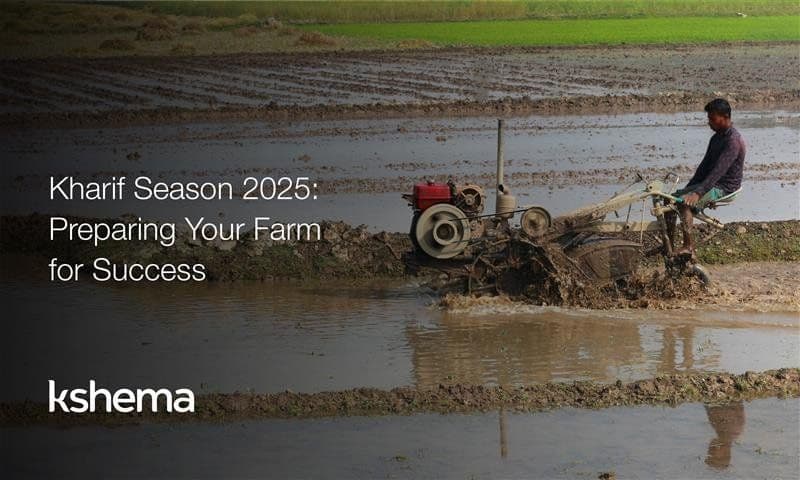
The Kharif season 2026 is crucial for Indian farmers, as timely farm preparation directly impacts yield and crop health.
This guide covers soil preparation, seed selection, water management, weather readiness, and risk planning to help farmers prepare effectively for the Kharif season.
Use this simple checklist to ensure your farm is fully prepared before sowing in the Kharif season 2026.
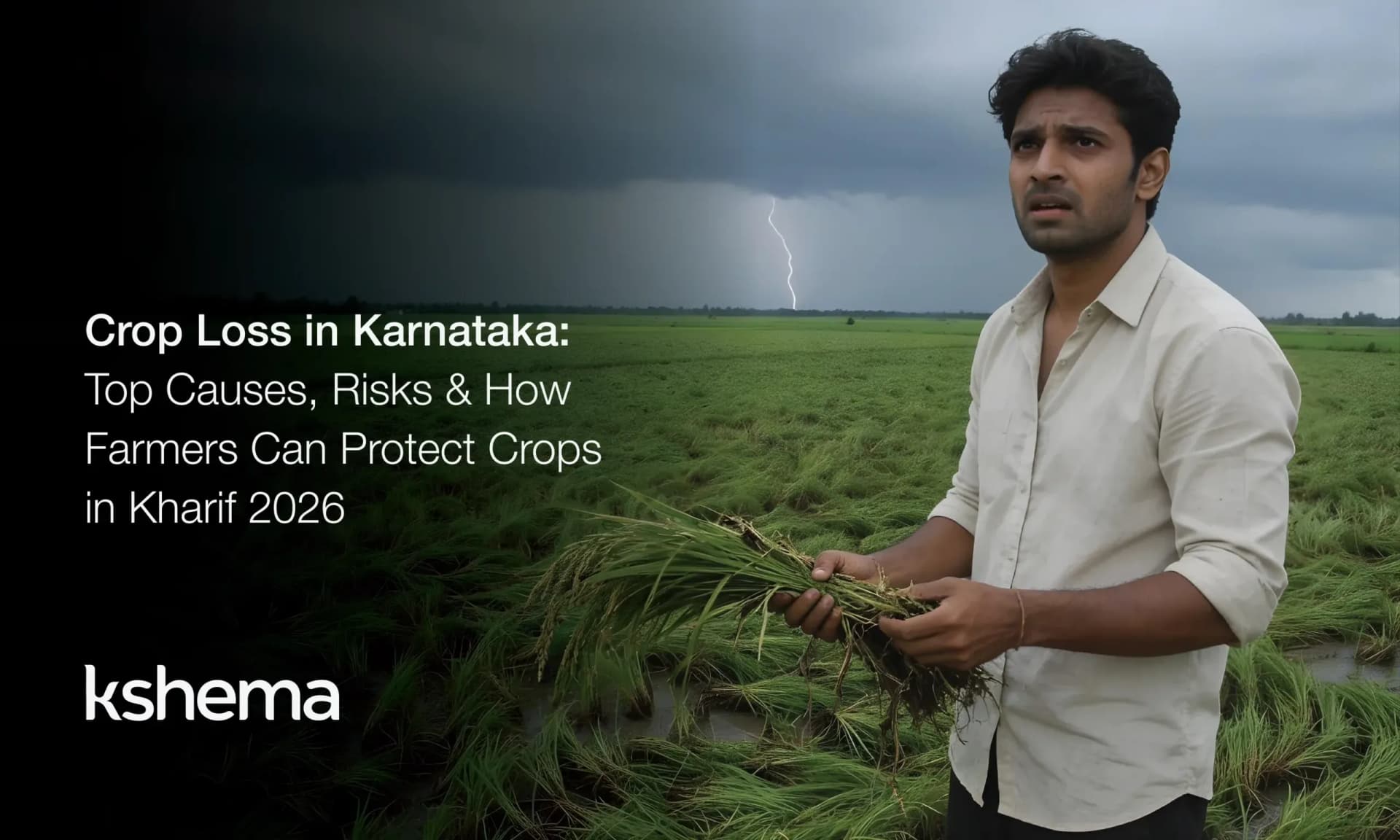
Understand how weather risks like heavy rainfall and effects of hailstorms can affect Kharif crops and what farmers can do to reduce losses.
Also read: Learn the key differences between Kharif and Rabi crops to plan your farming season better.
As the monsoon approaches, farmers across India gear up for the Kharif season—a critical time for sowing crops like paddy, maize, soybean, cotton, pulses, and groundnut. With unpredictable weather, rising input costs, and climate risks, smart preparation is key. Using the
The Kharif season is here, and appropriate preparation makes a considerable difference. With unpredictable weather patterns, increasing input costs, and growing climate-related risks, farmers today need more than just hard work — they need smart strategies. This blog offers guidance on how to prepare your farm for a successful Kharif season, ensuring maximum yield, sustainability, and peace of mind.
The Kharif season in India begins with the monsoon in June. Knowing the kharif sowing season, crop choices, and harvest months is key to success in 2026.
Kharif crops are typically sown with the arrival of the monsoon in June and harvested around October. Unlike Rabi crops, which are winter-grown and depend on stored soil moisture or irrigation, Kharif crops rely heavily on rainfall. Thus, planning well is crucial for this season.
Variations in rainfall, temperature, and pest outbreaks impact the success of Kharif farming. Hence, being informed and ready for different scenarios is the first step towards enjoying a productive season.
Before the sowing season begins, soil testing should be a priority. A simple test can reveal the pH value, nutrient levels, and organic matter content of your soil. Based on these results, farmers can choose suitable fertilisers or organic elements to balance the soil and enhance its nutrients.
A well-prepared field promotes healthy root development and enhances the crop's resistance to disease and water stress
Selecting the appropriate crop based on your region’s climate, soil type, and water availability is vital. For instance, paddy is ideal for high rainfall areas, while groundnut and cotton may be better suited to drier regions.
It is equally important to choose a high-yielding, pest-resistant, and drought-tolerant variety. Farmers can consult their local agricultural extension centres or Krishi Vigyan Kendras (KVKs) for recommendations tailored to their local conditions.
Access to reliable weather forecasts can help farmers plan their sowing and irrigation schedules. Several agri-tech apps and government portals now provide district-level rainfall predictions, which can guide decisions on when to sow and how much water to use. Efficient water management is critical during the Kharif season. Installation of rainwater harvesting systems, maintaining field bunds, and adoption of methods like drip irrigation or mulching can be of great assistance to farmers. Conserving water at the beginning means better crop resilience later in the season.
Pests and diseases are a recurring challenge during the humid Kharif months. Adopting Integrated Pest Management (IPM) practices can reduce crop losses and lower chemical usage. Here’s how:
Nutrient management is just as essential. Overuse or underuse of fertilisers can both damage the crop and the environment. A balanced approach, guided by soil test results, ensures better productivity and sustainability.
Despite best efforts, farming always involves risk. Unseasonal rains, floods, animal attacks and more — any of these can destroy months of hard work in a single blow. That’s why having crop insurance is not just an option; it’s a necessity.
For the Kharif season 2026, opt for affordable and reliable crop insurance solutions offered by Kshema General Insurance that gives you peace of mind. With simplified processes, quick claim settlements, and responsive customer support, our policies are designed to protect your income when nature doesn’t cooperate.
Timely investment in crop insurance today can protect your tomorrow.
Agriculture is evolving, and staying updated with the latest techniques, schemes, and innovations can help farmers improve their outcomes. Attending local training sessions, watching videos in your local language, joining farmer communities online, and reading about government subsidies or new seed varieties are crucial for farmers
Remember, informed farmers are empowered farmers.
Kharif crops are typically sown with the arrival of the monsoon in June and harvested around October. Unlike Rabi crops, which are winter-grown and depend on stored soil moisture or irrigation, Kharif crops rely heavily on rainfall. Thus, planning well is crucial for this season.
Variations in rainfall, temperature, and pest outbreaks impact the success of Kharif farming. Hence, being informed and ready for different scenarios is the first step towards enjoying a productive season.
Before the sowing season begins, soil testing should be a priority. A simple test can reveal the pH value, nutrient levels, and organic matter content of your soil. Based on these results, farmers can choose suitable fertilisers or organic elements to balance the soil and enhance its nutrients.
A well-prepared field promotes healthy root development and enhances the crop's resistance to disease and water stress
Selecting the appropriate crop based on your region’s climate, soil type, and water availability is vital. For instance, paddy is ideal for high rainfall areas, while groundnut and cotton may be better suited to drier regions.
It is equally important to choose a high-yielding, pest-resistant, and drought-tolerant variety. Farmers can consult their local agricultural extension centres or Krishi Vigyan Kendras (KVKs) for recommendations tailored to their local conditions.
Access to reliable weather forecasts can help farmers plan their sowing and irrigation schedules. Several agri-tech apps and government portals now provide district-level rainfall predictions, which can guide decisions on when to sow and how much water to use. Efficient water management is critical during the Kharif season. Installation of rainwater harvesting systems, maintaining field bunds, and adoption of methods like drip irrigation or mulching can be of great assistance to farmers. Conserving water at the beginning means better crop resilience later in the season.
Pests and diseases are a recurring challenge during the humid Kharif months. Adopting Integrated Pest Management (IPM) practices can reduce crop losses and lower chemical usage. Here’s how:
Nutrient management is just as essential. Overuse or underuse of fertilisers can both damage the crop and the environment. A balanced approach, guided by soil test results, ensures better productivity and sustainability.
Despite best efforts, farming always involves risk. Unseasonal rains, floods, animal attacks and more — any of these can destroy months of hard work in a single blow. That’s why having crop insurance is not just an option; it’s a necessity.
For the Kharif season 2026, opt for affordable and reliable crop insurance solutions offered by Kshema General Insurance that gives you peace of mind. With simplified processes, quick claim settlements, and responsive customer support, our policies are designed to protect your income when nature doesn’t cooperate.
Timely investment in crop insurance today can protect your tomorrow.
Agriculture is evolving, and staying updated with the latest techniques, schemes, and innovations can help farmers improve their outcomes. Attending local training sessions, watching videos in your local language, joining farmer communities online, and reading about government subsidies or new seed varieties are crucial for farmers
Remember, informed farmers are empowered farmers.
The Kharif season in India typically begins with the onset of the southwest monsoon in June, and crops are harvested between September and October, depending on the crop type and regional climate.
The Kharif season in India typically begins with the onset of the southwest monsoon in June, and crops are harvested between September and October, depending on the crop type and regional climate.
Helpful guide: Know when and how to file a crop insurance claim if Kharif crops are damaged.
The Kharif season is not just a time to plant crops — it’s a time to plant hopes, dreams, and the future of your family. With smart preparation, timely actions, and the backing of trusted partners like Kshema General Insurance, you can face the season with confidence.
Make this Kharif season your most successful yet. Test your soil. Choose wisely. Insure wisely. And reap the rewards of your labour with pride. Wishing all our farmers a prosperous and protected Kharif season 2026! Learn more about our crop insurance policies to buy this Kharif season: Dial our toll-free number1800 572 3013 today.
Kharif crops are sown with the arrival of the monsoon, typically in June and July.
Common Kharif crops include paddy, maize, cotton, soybean, groundnut, and pulses like urad and moong.
Most Kharif crops are harvested between September and October, depending on the region and rainfall.
Paddy is a Kharif crop, grown during the monsoon season
The sowing period for Kharif crops typically starts in June and continues through July, depending on the onset of the monsoon in each region.
Kharif crops are sown with the arrival of the monsoon, typically in June and July.
Common Kharif crops include paddy, maize, cotton, soybean, groundnut, and pulses like urad and moong.
Most Kharif crops are harvested between September and October, depending on the region and rainfall.
Paddy is a Kharif crop, grown during the monsoon season
The sowing period for Kharif crops typically starts in June and continues through July, depending on the onset of the monsoon in each region.
“We do not assume any liability for any actions undertaken based on the information provided here. The information gathered from various sources and are displayed here for general guidance and does not constitute any professional advice or warranty of any kind.”
Crop Insurance