
Stay Updated with Our Latest Blogs
Subscribe to our blog and get the latest insurance tips, guides, and industry updates delivered to your inbox
Subscribe to our blog and get the latest insurance tips, guides, and industry updates delivered to your inbox
Choosing the right winter crop can directly influence a small farmer’s earnings. Many farmers first look for “Mustard is Rabi or Kharif crop” before planning their Rabi season. Wheat and mustard are both important Rabi crops, but they differ in climate needs, cost, MSP support and risk. This guide explains the correct season for mustard, compares mustard with wheat, and helps small farmers choose the most suitable crop for their region and resources.
The Rabi season is the second crop season of India, reliant on irrigation unlike the longer Kharif season which is fed by Monsoon. Traditionally, crops like wheat, mustard, barley, and peas headline the Rabi season which stretches from November to April.
Many farmers search “mustard is Rabi or Kharif crop” before deciding between mustard and wheat during the Rabi season.
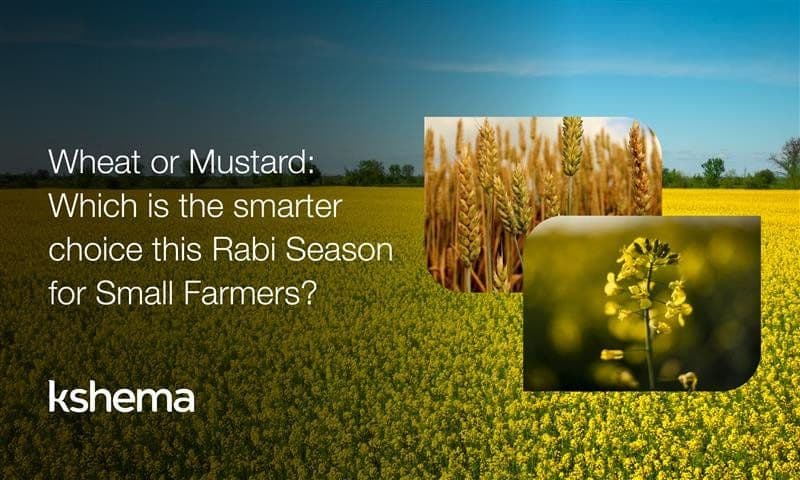
Mustard is a Rabi crop. It is sown in October–November and harvested in February–March. It grows best in cool winter weather and cannot handle heavy monsoon rainfall, which is why it is unsuitable for the Kharif season. Mustard is grouped with other Rabi crops such as wheat, barley and gram.
The Rabi season begins after the monsoon rains when soil moisture supports winter crops. Farmers sow seeds in November and harvest by March or April. Wheat and mustard are major Rabi crops, but they serve different purposes—wheat is a staple food grain, while mustard is mainly grown for oil extraction.
Wheat and mustard are major Rabi crops in India. Wheat provides stable yields but requires higher water input, while mustard suits small farmers due to lower costs and better climate resilience.
Many farmers search whether mustard is rabi or kharif crop before choosing between wheat and mustard.
Wheat is a core Rabi crop that needs winter temperatures, irrigation and stable weather. It does not grow well during the humid Kharif monsoon, making it suitable only for winter cultivation.
The Rabi season runs from November to April, with sowing starting soon after the monsoon ends and harvesting completed in early summer. Key Rabi crops include wheat, mustard, barley, gram and peas, all of which depend on irrigation and winter temperatures.
Wheat is favoured by small farmers because it has strong MSP procurement support. Prices stay stable throughout the season. Mustard, although under MSP, has limited procurement centres, causing uncertainty. Mustard prices also fluctuate depending on oil imports. Wheat requires moderate input costs, while mustard needs more pest control and monitoring.
Mustard is sensitive to sudden temperature drops and excessive winter rain, which reduce flower formation and yield. Wheat tolerates cooler temperatures and performs better under unpredictable weather. With erratic winters becoming common, wheat offers more stability than mustard.
Beyond economics and climate, social factors influence crop choices.
The broader market environment also tilts the balance toward wheat.
Export potential: Wheat has growing export opportunities being a food grain. Mustard oil, while popular domestically, has limited international demand.
Consumer demand: Wheat flour is consumed daily across India, ensuring steady demand. Mustard oil faces competition from many other alternatives, primarily palm oil.
Supply chain support: Cold storage and transport facilities are better developed for wheat than for mustard, reducing post-harvest losses.
Also Read: 10 Benefits of Crop Insurance for Farmers
These challenges reduce net income for small farmers.
When weighing all these factors, wheat emerges as the safer and more profitable choice.
This combination makes wheat the crop of choice for many small farmers during the Rabi season.
The preference for wheat highlights the importance of security and stability in farming decisions. For small farmers, the Rabi season is not just about maximising profits—it’s about survival, risk management, and ensuring food for their families. Wheat, with its reliability, fulfills these needs better than mustard in the current context.
Rabi crops can be affected by frost, unseasonal rain, temperature shocks and pest attacks. Crop insurance helps small farmers recover part of their losses, repay loans and prepare for the next season without falling into financial distress. Using simple digital tools like Kshema makes the process easier.
Wheat and mustard are major Rabi crops in India. Wheat provides stable yields but requires higher water input, while mustard suits small farmers due to lower costs and better climate resilience.
Many farmers search whether mustard is rabi or kharif crop before choosing between wheat and mustard.
Wheat is a core Rabi crop that needs winter temperatures, irrigation and stable weather. It does not grow well during the humid Kharif monsoon, making it suitable only for winter cultivation.
The Rabi season runs from November to April, with sowing starting soon after the monsoon ends and harvesting completed in early summer. Key Rabi crops include wheat, mustard, barley, gram and peas, all of which depend on irrigation and winter temperatures.
Wheat is favoured by small farmers because it has strong MSP procurement support. Prices stay stable throughout the season. Mustard, although under MSP, has limited procurement centres, causing uncertainty. Mustard prices also fluctuate depending on oil imports. Wheat requires moderate input costs, while mustard needs more pest control and monitoring.
Mustard is sensitive to sudden temperature drops and excessive winter rain, which reduce flower formation and yield. Wheat tolerates cooler temperatures and performs better under unpredictable weather. With erratic winters becoming common, wheat offers more stability than mustard.
Beyond economics and climate, social factors influence crop choices.
The broader market environment also tilts the balance toward wheat.
Export potential: Wheat has growing export opportunities being a food grain. Mustard oil, while popular domestically, has limited international demand.
Consumer demand: Wheat flour is consumed daily across India, ensuring steady demand. Mustard oil faces competition from many other alternatives, primarily palm oil.
Supply chain support: Cold storage and transport facilities are better developed for wheat than for mustard, reducing post-harvest losses.
Also Read: 10 Benefits of Crop Insurance for Farmers
These challenges reduce net income for small farmers.
When weighing all these factors, wheat emerges as the safer and more profitable choice.
This combination makes wheat the crop of choice for many small farmers during the Rabi season.
The preference for wheat highlights the importance of security and stability in farming decisions. For small farmers, the Rabi season is not just about maximising profits—it’s about survival, risk management, and ensuring food for their families. Wheat, with its reliability, fulfills these needs better than mustard in the current context.
Rabi crops can be affected by frost, unseasonal rain, temperature shocks and pest attacks. Crop insurance helps small farmers recover part of their losses, repay loans and prepare for the next season without falling into financial distress. Using simple digital tools like Kshema makes the process easier.
Mustard and wheat are both major Rabi crops, but they offer different advantages. Mustard is a Rabi crop suited for cool winter conditions, while wheat provides greater stability due to MSP support, climate resilience and household food use. Understanding whether mustard is Rabi or Kharif helps farmers choose the right crop based on climate, cost and local resources.
Understanding whether mustard is rabi or kharif crop helps small farmers make better Rabi‑season decisions.
To check the latest Minimum Support Price (MSP) details and official government updates for Rabi crops, Click here to view MSP details for Rabi crops.
The Rabi season is India’s winter crop season that starts in November and ends in April. Farmers sow crops like wheat, mustard, barley, and peas after the monsoon rains when soil moisture is retained.
Mustard is a Rabi crop. It grows in winter and is harvested before summer, making it unsuitable for the rainy Kharif season.
Wheat is a Rabi crop. It needs cool temperatures and irrigation, and it cannot grow well during monsoon months.
The Rabi season runs from November to April, with sowing done after the monsoon.
Wheat is usually more stable due to MSP procurement, while mustard has higher profit potential but also higher risk.
Mustard requires less water than wheat, making it suitable for low‑irrigation regions.
The Rabi season is India’s winter crop season that starts in November and ends in April. Farmers sow crops like wheat, mustard, barley, and peas after the monsoon rains when soil moisture is retained.
Mustard is a Rabi crop. It grows in winter and is harvested before summer, making it unsuitable for the rainy Kharif season.
Wheat is a Rabi crop. It needs cool temperatures and irrigation, and it cannot grow well during monsoon months.
The Rabi season runs from November to April, with sowing done after the monsoon.
Wheat is usually more stable due to MSP procurement, while mustard has higher profit potential but also higher risk.
Mustard requires less water than wheat, making it suitable for low‑irrigation regions.
“We do not assume any liability for any actions undertaken based on the information provided here. The information gathered from various sources and are displayed here for general guidance and does not constitute any professional advice or warranty of any kind.”
Crop Insurance