
Stay Updated with Our Latest Blogs
Subscribe to our blog and get the latest insurance tips, guides, and industry updates delivered to your inbox
Subscribe to our blog and get the latest insurance tips, guides, and industry updates delivered to your inbox
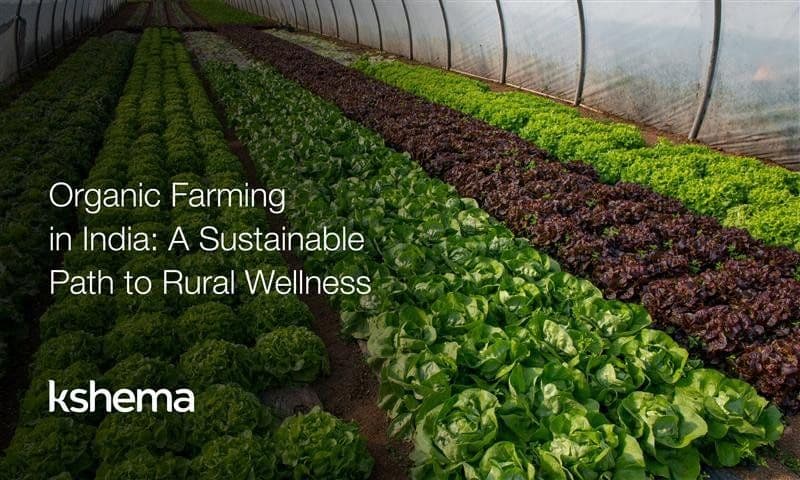
Organic farming in India is gaining momentum as farmers, consumers, and policymakers prioritize soil health, biodiversity, and chemical-free food. This guide explains practical methods, benefits, market opportunities, and government schemes that make the transition to sustainable organic agriculture achievable for smallholders and commercial growers alike.
Organic farming in India has emerged as more than just a trend. It is a transformative movement reshaping the agricultural landscape and empowering rural communities. As the country grapples with the environmental and health consequences of conventional farming, organic methods offer sustainable and holistic alternatives. This blog explores how organic farming is not only revitalising soil and ecosystems but also fostering rural wellness through economic resilience, community empowerment, and healthier lifestyles.
Switch to Organic. Secure Your Soil. Discover how organic farming in India boosts income, health, and resilience.
👉 Download the kshema app to explore crop protection plans
Organic farming in India addresses soil degradation, groundwater pollution, and farmer health risks by eliminating synthetic pesticides and fertilizers. It supports rural livelihoods through premium pricing, local inputs, and value-added products while contributing to national goals on sustainability and climate adaptation.
Restores soil organic matter, enhances water retention, reduces chemical runoff, and promotes pollinators and biodiversity.
Reduces farmer input costs, accesses niche markets and exports, improves household nutrition, and builds resilient livelihoods.
Restores soil organic matter, enhances water retention, reduces chemical runoff, and promotes pollinators and biodiversity.
Reduces farmer input costs, accesses niche markets and exports, improves household nutrition, and builds resilient livelihoods.
Adopt simple, proven practices that rebuild ecosystems and productivity without synthetics—these form the backbone of organic systems.
Use compost, green manures, crop residues, and biofertilizers (rhizobium, azotobacter, phosphobacteria) to maintain fertility.
Rotate legumes and cereals, practice intercropping to break pest cycles and improve nitrogen availability.
Apply neem, botanical extracts, trap crops, pheromone traps, and biological control agents.
Mulching, contour bunds, drip irrigation, and rainwater harvesting to improve water efficiency and reduce erosion.
Adopt simple, proven practices that rebuild ecosystems and productivity without synthetics—these form the backbone of organic systems.
Use compost, green manures, crop residues, and biofertilizers (rhizobium, azotobacter, phosphobacteria) to maintain fertility.
Rotate legumes and cereals, practice intercropping to break pest cycles and improve nitrogen availability.
Apply neem, botanical extracts, trap crops, pheromone traps, and biological control agents.
Mulching, contour bunds, drip irrigation, and rainwater harvesting to improve water efficiency and reduce erosion.
Transitioning can be phased to reduce risk. Start small, monitor results, and scale as confidence and market access grow.
Soil tests, financial planning, select pilot fields, and decide certification needs.
Start composting, introduce cover crops, stop synthetic inputs, and train labour on organic methods.
Maintain field logs, input sources, and harvest records. Choose certification (NPOP/India Organic) if selling as certified organic.
Transitioning can be phased to reduce risk. Start small, monitor results, and scale as confidence and market access grow.
Soil tests, financial planning, select pilot fields, and decide certification needs.
Start composting, introduce cover crops, stop synthetic inputs, and train labour on organic methods.
Maintain field logs, input sources, and harvest records. Choose certification (NPOP/India Organic) if selling as certified organic.
Demand for organic produce in domestic retail, e-commerce, and export channels is rising. Value addition (packaging, processing) and farmer-producer organizations (FPOs) improve margins.
Organic staples, fresh fruits/veg, and processed foods find premium buyers in urban markets and online platforms.
Comply with NPOP and buyer standards; popular exports include spices, oilseeds, and pulses.
Form FPOs, use traceability, and local branding to unlock better prices and reduce transaction costs.
Demand for organic produce in domestic retail, e-commerce, and export channels is rising. Value addition (packaging, processing) and farmer-producer organizations (FPOs) improve margins.
Organic staples, fresh fruits/veg, and processed foods find premium buyers in urban markets and online platforms.
Comply with NPOP and buyer standards; popular exports include spices, oilseeds, and pulses.
Form FPOs, use traceability, and local branding to unlock better prices and reduce transaction costs.
Several government initiatives and certifications support adoption, training, and market access for organic farmers.
Paramparagat Krishi Vikas Yojana (PKVY), Mission Organic Value Chain Development (MOVCDNER), and subsidies for organic inputs and certification.
National Programme for Organic Production (NPOP), India Organic, and third-party certifiers for export and domestic markets.
Extension services, training programs, crop insurance considerations, and access to low-interest credit via NABARD and state programs.
Several government initiatives and certifications support adoption, training, and market access for organic farmers.
Paramparagat Krishi Vikas Yojana (PKVY), Mission Organic Value Chain Development (MOVCDNER), and subsidies for organic inputs and certification.
National Programme for Organic Production (NPOP), India Organic, and third-party certifiers for export and domestic markets.
Extension services, training programs, crop insurance considerations, and access to low-interest credit via NABARD and state programs.
Challenges include transition time, yield variability, certification costs, and market linkages. Risk mitigation through crop diversification, staggered conversion, and direct sales is essential.
Short-term yield drops, pest outbreaks, price volatility, and access to organic inputs.
Pilot plots, contract farming, value-addition, insurance for crops, and joining FPOs/cooperatives.
Challenges include transition time, yield variability, certification costs, and market linkages. Risk mitigation through crop diversification, staggered conversion, and direct sales is essential.
Short-term yield drops, pest outbreaks, price volatility, and access to organic inputs.
Pilot plots, contract farming, value-addition, insurance for crops, and joining FPOs/cooperatives.
Short examples and best practices show practical adoption paths and income improvements.
A mixed-crop farmer who used vermicompost, legume rotations, and direct e-commerce sales to increase net income.
An agri-entrepreneur who consolidated producers, secured NPOP certification, and exported spices.
Short examples and best practices show practical adoption paths and income improvements.
A mixed-crop farmer who used vermicompost, legume rotations, and direct e-commerce sales to increase net income.
An agri-entrepreneur who consolidated producers, secured NPOP certification, and exported spices.
Organic farming in India offers a pathway to healthier soils, safer food, climate resilience, and new market opportunities. With phased transitions, farmer networks, government support, and market-focused planning, growers can make sustainable agriculture both environmentally sound and economically viable. Start with small pilots, leverage available schemes and certifications, and scale as you build soil health and buyer relationships.
Organic farming avoids synthetic fertilizers and pesticides, relying on compost, green manures, biological pest control, and crop rotations to build soil health and manage pests. Conventional farming commonly uses synthetic chemicals to maximise short-term yields.
Typically 2–3 years is required to fully transition to certified organic status under many schemes, though benefits to soil and biodiversity begin earlier. Certification timelines depend on prior chemical use and chosen standards.
Yes. Smallholders can reduce input costs, access premium local and export markets, and increase resilience by diversifying crops and joining FPOs for better bargaining power and reduced transaction costs.
Key programs include PKVY, MOVCDNER, and various state initiatives that provide training, subsidies for organic inputs, financial assistance for certification, and support for market linkages.
Yields may decline initially during transition, but with improved soil health, diversifications, and appropriate management, organic farms can match or approach conventional yields while earning premiums and reducing input costs.
Organic farming avoids synthetic fertilizers and pesticides, relying on compost, green manures, biological pest control, and crop rotations to build soil health and manage pests. Conventional farming commonly uses synthetic chemicals to maximise short-term yields.
Typically 2–3 years is required to fully transition to certified organic status under many schemes, though benefits to soil and biodiversity begin earlier. Certification timelines depend on prior chemical use and chosen standards.
Yes. Smallholders can reduce input costs, access premium local and export markets, and increase resilience by diversifying crops and joining FPOs for better bargaining power and reduced transaction costs.
Key programs include PKVY, MOVCDNER, and various state initiatives that provide training, subsidies for organic inputs, financial assistance for certification, and support for market linkages.
Yields may decline initially during transition, but with improved soil health, diversifications, and appropriate management, organic farms can match or approach conventional yields while earning premiums and reducing input costs.
“We do not assume any liability for any actions undertaken based on the information provided here. The information gathered from various sources and are displayed here for general guidance and does not constitute any professional advice or warranty of any kind.”
Crop Insurance