
Stay Updated with Our Latest Blogs
Subscribe to our blog and get the latest insurance tips, guides, and industry updates delivered to your inbox
Subscribe to our blog and get the latest insurance tips, guides, and industry updates delivered to your inbox
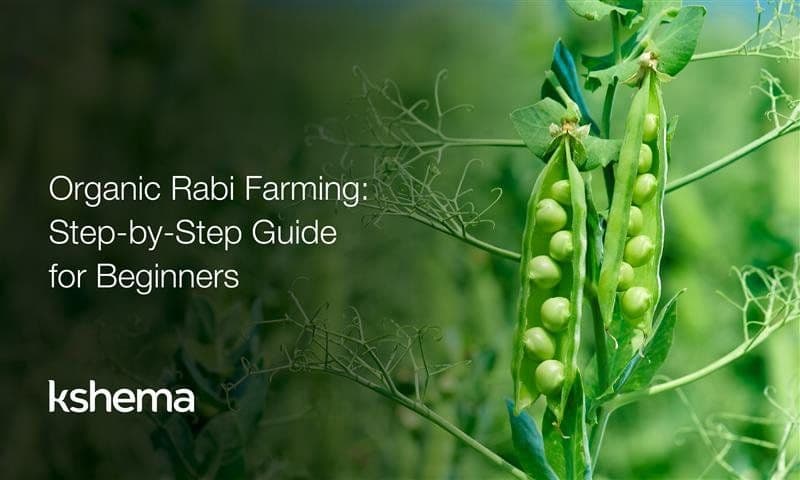
Organic Rabi farming is becoming essential for farmers looking to reduce input costs, improve soil health and grow chemical free crops during the winter season. As temperatures drop and rainfall becomes scarce, Rabi crops need careful soil preparation, organic inputs and efficient smart irrigation. This guide explains the key practices, suitable crops, major risks and income protection options that help farmers succeed with organic Rabi farming in 2026.
Organic rabi farming refers to cultivating crops during the rabi season (typically from October to December) using organic methods.
Organic Rabi farming focuses on building healthy soil using compost, green manure and natural pest control instead of chemical fertilizers. The aim is to grow crops that are safe to eat, protect soil fertility and reduce the cost of cultivation for farmers. These methods also help fields remain productive for many years.
In the context of organic farming in India, crop selection often depends on traditional knowledge passed down through generations, ensuring that local varieties are preserved and promoted.
Healthy soil is the foundation of organic rabi farming. Instead of chemical fertilisers, farmers use:
This approach aligns with sustainable farming, as it reduces dependency on external inputs and enhances long-term soil fertility.
need timely but controlled irrigation as winter rainfall is minimal. For organic Rabi farming, farmers should use drip or sprinkler systems to save water and avoid waterlogging. Mulching with crop residues helps keep moisture in the soil longer. Planning irrigation based on soil moisture and crop stage reduces cost and improves yield.
Efficient irrigation not only supports crop growth but also contributes to sustainable farming by minimising water wastage.
One of the biggest challenges in organic rabi farming is managing pests without chemicals. But there are natural alternatives that farmers can use to overcome:
These conventional techniques are widely practiced in organic farming in India, where farmers rely on indigenous knowledge and eco-friendly solutions.
Weeds compete with crops for nutrients and water. In organic rabi farming, farmers avoid chemical herbicides and instead use:
This ensures that farming remains aligned with sustainable farming principles, protecting biodiversity and reducing environmental harm.
Harvesting at the right time is critical in organic rabi farming. Crops should be harvested when they reach full maturity to ensure maximum yield and quality.
Post-harvest handling is especially important in organic farming in India, where certification standards require strict adherence to organic practices from seed to storage.
The first step towards organic rabi farming is choosing crops that thrive in your region’s climate and soil conditions.
In the context of organic farming in India, crop selection often depends on traditional knowledge passed down through generations, ensuring that local varieties are preserved and promoted.
Healthy soil is the foundation of organic rabi farming. Instead of chemical fertilisers, farmers use:
This approach aligns with sustainable farming, as it reduces dependency on external inputs and enhances long-term soil fertility.
need timely but controlled irrigation as winter rainfall is minimal. For organic Rabi farming, farmers should use drip or sprinkler systems to save water and avoid waterlogging. Mulching with crop residues helps keep moisture in the soil longer. Planning irrigation based on soil moisture and crop stage reduces cost and improves yield.
Efficient irrigation not only supports crop growth but also contributes to sustainable farming by minimising water wastage.
One of the biggest challenges in organic rabi farming is managing pests without chemicals. But there are natural alternatives that farmers can use to overcome:
These conventional techniques are widely practiced in organic farming in India, where farmers rely on indigenous knowledge and eco-friendly solutions.
Weeds compete with crops for nutrients and water. In organic rabi farming, farmers avoid chemical herbicides and instead use:
This ensures that farming remains aligned with sustainable farming principles, protecting biodiversity and reducing environmental harm.
Harvesting at the right time is critical in organic rabi farming. Crops should be harvested when they reach full maturity to ensure maximum yield and quality.
Post-harvest handling is especially important in organic farming in India, where certification standards require strict adherence to organic practices from seed to storage.
Farmers Should Prepare for Organic Rabi crops face risks such as unexpected winter rainfall, frost damage, nutrient deficiency due to low temperatures and pest attacks in early stages. Because chemical inputs are avoided, farmers must rely on timely irrigation, strong soil preparation and natural pest control to keep crops healthy. Climate variability makes protection even more important in 2026.
The advantages of organic rabi farming go beyond just producing chemical-free food:
By adopting sustainable farming, farmers contribute to long-term agricultural resilience and food security.
While this blog focusses on organic rabi farming, it’s important to see how it fits into the larger movement of organic farming in India.
India has a rich tradition of natural farming methods, with practices like crop rotation and mixed cropping deeply rooted in rural communities.
Government initiatives such as the Parampara at Krishi Vikas Yojana (PKVY) encourage farmers to adopt organic methods. Learn more aboutIndia’s National Mission on Natural Farming here.
States like Sikkim have already declared themselves fully organic, setting an example for others.
This signifies that organic farming in India is seeing a revival of centuries-old wisdom but adapted to modern needs.
The principles of organic rabi farming are closely tied to sustainable farming. Both emphasise:
As climate change and resource depletion threaten agriculture, sustainable farming practices like organic methods are becoming essential for survival.
By following these steps, beginners can successfully practice organic rabi farming while contributing to the broader goals of organic farming in India and sustainable farming.
Organic farmers invest heavily in compost, seeds and labour. Sudden frost, rainfall or pest outbreaks can cause severe losses. Crop insurance helps farmers recover from these risks without losing all their income. Kshema’s climate aware insurance plans support Rabi farmers by offering protection for seasonal risks and quick claim support.
Farmers Should Prepare for Organic Rabi crops face risks such as unexpected winter rainfall, frost damage, nutrient deficiency due to low temperatures and pest attacks in early stages. Because chemical inputs are avoided, farmers must rely on timely irrigation, strong soil preparation and natural pest control to keep crops healthy. Climate variability makes protection even more important in 2026.
The advantages of organic rabi farming go beyond just producing chemical-free food:
By adopting sustainable farming, farmers contribute to long-term agricultural resilience and food security.
While this blog focusses on organic rabi farming, it’s important to see how it fits into the larger movement of organic farming in India.
India has a rich tradition of natural farming methods, with practices like crop rotation and mixed cropping deeply rooted in rural communities.
Government initiatives such as the Parampara at Krishi Vikas Yojana (PKVY) encourage farmers to adopt organic methods. Learn more aboutIndia’s National Mission on Natural Farming here.
States like Sikkim have already declared themselves fully organic, setting an example for others.
This signifies that organic farming in India is seeing a revival of centuries-old wisdom but adapted to modern needs.
The principles of organic rabi farming are closely tied to sustainable farming. Both emphasise:
As climate change and resource depletion threaten agriculture, sustainable farming practices like organic methods are becoming essential for survival.
By following these steps, beginners can successfully practice organic rabi farming while contributing to the broader goals of organic farming in India and sustainable farming.
Organic farmers invest heavily in compost, seeds and labour. Sudden frost, rainfall or pest outbreaks can cause severe losses. Crop insurance helps farmers recover from these risks without losing all their income. Kshema’s climate aware insurance plans support Rabi farmers by offering protection for seasonal risks and quick claim support.
Organic Rabi farming strengthens soil health, reduces input costs and helps farmers grow healthier crops. By using natural inputs, proper irrigation and crop rotation, farmers can improve productivity even during winter. However, climate risks such as frost and unseasonal rain can impact yield. With Kshema’s crop insurance solutions, organic farmers can protect their investment and ensure stable income in 2026. Start your organic journey with confidence and safeguard your fields with the Kshema App.
Organic Rabi farming uses natural inputs like compost and biofertilizers to maintain soil health and avoid chemicals.
Wheat, mustard, barley, and pulses are ideal for organic Rabi farming.
Farmers should use organic manure, crop rotation, and soil testing before sowing.
It improves soil fertility, reduces input costs, and ensures healthier crops.
Organic Rabi farming uses natural inputs like compost and biofertilizers to maintain soil health and avoid chemicals.
Wheat, mustard, barley, and pulses are ideal for organic Rabi farming.
Farmers should use organic manure, crop rotation, and soil testing before sowing.
It improves soil fertility, reduces input costs, and ensures healthier crops.
“We do not assume any liability for any actions undertaken based on the information provided here. The information gathered from various sources and are displayed here for general guidance and does not constitute any professional advice or warranty of any kind.”
Crop Insurance