
Stay Updated with Our Latest Blogs
Subscribe to our blog and get the latest insurance tips, guides, and industry updates delivered to your inbox
Subscribe to our blog and get the latest insurance tips, guides, and industry updates delivered to your inbox
The Kharif season depends heavily on the southwest monsoon, but rainfall has become increasingly unpredictable for farmers in many Indian states. Even a short dry spell during germination or flowering can reduce crop yield. Rainwater harvesting offers farmers a simple, low‑cost way to store water, improve soil moisture and protect crops during uncertain weather. This guide explains practical rainwater harvesting methods suited to small and marginal farmers, along with expert tips and available government support.
Kharif crops such as paddy, maize, cotton and pulses need consistent moisture, especially during early growth and flowering. A 7–10 day dry spell can affect germination and reduce yield. Rainwater harvesting helps store runoff during heavy showers, improves moisture retention, reduces soil erosion and provides emergency irrigation when rains arrive late or stop suddenly.
Kharif crops such as paddy, maize, cotton and pulses need consistent moisture, especially during early growth and flowering. A 7–10 day dry spell can affect germination and reduce yield. Rainwater harvesting helps store runoff during heavy showers, improves moisture retention, reduces soil erosion and provides emergency irrigation when rains arrive late or stop suddenly.
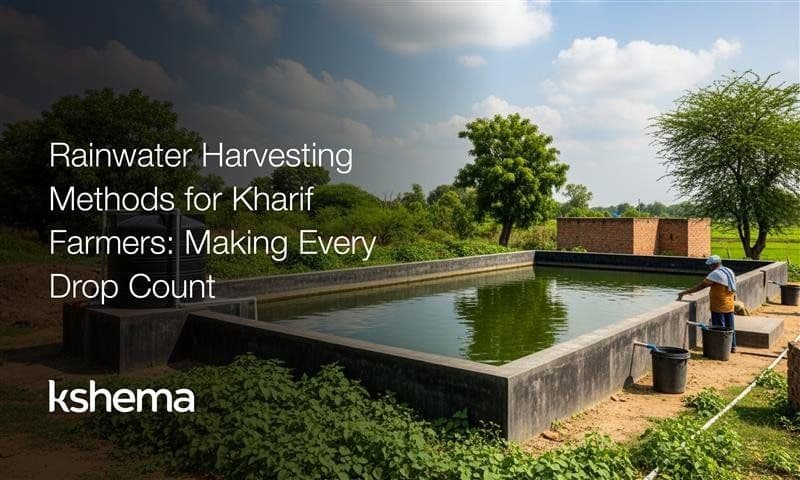
What it is: A dug-out pond within or near the farm that collects and stores rainwater or excess runoff.
Best for: Individual or group use in medium to high rainfall areas Benefits:
Tip: In black cotton soil areas, pond linings (with clay or plastic) can reduce water seepage.
What it is: Construction of small earthen bunds along the natural contours of sloped land.
Best for: Hilly or undulating terrain
Benefits:
Farmer Tip: Strengthen bunds by planting grasses (like vetiver or marvel) on the ridges.
What it is: Building small barriers across seasonal streams or nalas to collect rainwater.
Best for: Cluster or community-level use in villages
Benefits:
Government Support: Many states support these under MGNREGA and Watershed Development Programmes
What it is: Small dug pits or trenches in the field or nearby fallow land to allow water to seep underground.
Best for: Dryland areas or places with falling groundwater levels
Benefits:
Farmer Tip: Fill with stones or gravel to prevent clogging and improve infiltration.
What it is: Stacking loose stones in the path of small streams or water channels on hilly terrain.
Best for: Tribal or semi-arid regions with small catchments
Benefits:
Cost-Effective: Can be built with local stones and labour.
What it is: Small rectangular plots are created using bunds to divide larger fields.
Best for: Black soil regions like Maharashtra, Madhya Pradesh, Karnataka
Benefits:
Farmer Tip: Combine with mulching to retain moisture longer.
What it is: A dug-out pond within or near the farm that collects and stores rainwater or excess runoff.
Best for: Individual or group use in medium to high rainfall areas Benefits:
Tip: In black cotton soil areas, pond linings (with clay or plastic) can reduce water seepage.
What it is: Construction of small earthen bunds along the natural contours of sloped land.
Best for: Hilly or undulating terrain
Benefits:
Farmer Tip: Strengthen bunds by planting grasses (like vetiver or marvel) on the ridges.
What it is: Building small barriers across seasonal streams or nalas to collect rainwater.
Best for: Cluster or community-level use in villages
Benefits:
Government Support: Many states support these under MGNREGA and Watershed Development Programmes
What it is: Small dug pits or trenches in the field or nearby fallow land to allow water to seep underground.
Best for: Dryland areas or places with falling groundwater levels
Benefits:
Farmer Tip: Fill with stones or gravel to prevent clogging and improve infiltration.
What it is: Stacking loose stones in the path of small streams or water channels on hilly terrain.
Best for: Tribal or semi-arid regions with small catchments
Benefits:
Cost-Effective: Can be built with local stones and labour.
What it is: Small rectangular plots are created using bunds to divide larger fields.
Best for: Black soil regions like Maharashtra, Madhya Pradesh, Karnataka
Benefits:
Farmer Tip: Combine with mulching to retain moisture longer.
Rainwater harvesting is a national priority, and farmers can access technical and financial support through:
Visit your Krishi Vigyan Kendra (KVK) or Gram Panchayat to know what’s available in your district.
Rainwater harvesting is a national priority, and farmers can access technical and financial support through:
Visit your Krishi Vigyan Kendra (KVK) or Gram Panchayat to know what’s available in your district.
Rainwater harvesting helps Kharif farmers save water, store runoff and protect their crops during dry spells or delayed monsoon. Simple structures like farm ponds, bunds and percolation pits improve soil moisture and crop resilience. With proper planning and support from local agriculture departments, farmers can secure better yields even in uncertain rainfall conditions.
It provides backup water during dry spells and reduces crop loss risks.
Stored rainwater supports seedlings and early irrigation until monsoon rainfall begins.
Farm ponds and percolation pits are easy, low‑cost, and effective for small farmers.
Yes, it boosts moisture, reduces erosion, and strengthens nutrient availability.
Yes, farmers receive support through various central and state water‑conservation programmes.
It provides backup water during dry spells and reduces crop loss risks.
Stored rainwater supports seedlings and early irrigation until monsoon rainfall begins.
Farm ponds and percolation pits are easy, low‑cost, and effective for small farmers.
Yes, it boosts moisture, reduces erosion, and strengthens nutrient availability.
Yes, farmers receive support through various central and state water‑conservation programmes.
“We do not assume any liability for any actions undertaken based on the information provided here. The information gathered from various sources and are displayed here for general guidance and does not constitute any professional advice or warranty of any kind.”
Crop Insurance