
Stay Updated with Our Latest Blogs
Subscribe to our blog and get the latest insurance tips, guides, and industry updates delivered to your inbox
Subscribe to our blog and get the latest insurance tips, guides, and industry updates delivered to your inbox
Harvesting is one of the most critical stages in agriculture. Months of hard work, investment, and care culminate in this period when crops are finally collected and prepared for storage or sale. However, improper harvesting techniques can undo months of effort, leading to damaged produce, lower yields, and financial losses.
Protecting the harvest is just as important as growing a healthy crop. By adopting safe and efficient harvesting techniques, farmers can ensure that their crops retain quality, fetch better prices in the market, and contribute to long-term sustainability.
In this article, we will explore safe harvesting techniques and best practices that every farmer should follow to protect crops from damage.
Safe harvesting techniques involves timely cutting and careful handling.
The timing and method of harvesting directly influence both the quantity and quality of crops. Using improper techniques can cause:
Safe harvesting techniques are not only about minimising losses but also about maintaining the nutritional and economic value of crops.
Safe harvesting techniques involves timely cutting and careful handling.
The timing and method of harvesting directly influence both the quantity and quality of crops. Using improper techniques can cause:
Safe harvesting techniques are not only about minimising losses but also about maintaining the nutritional and economic value of crops.
One of the simplest but most crucial harvesting techniques is choosing the correct time. Harvesting too early can result in immature crops with low weight and poor taste. Waiting too long may cause grains or fruits to drop, rot, or be attacked by pests.
Farmers should observe crop-specific indicators such as:
Timely harvesting not only prevents over-ripening but also reduces post-harvest handling risks.
Traditional sickles or knives are still common in many rural areas, but they often cause uneven cutting and damage. Using well-maintained tools or mechanised harvesters helps reduce crop losses and improves efficiency.
Regular maintenance of equipment is also a vital part of safe harvesting techniques, as worn-out blades or faulty machines can lead to unnecessary crop damage.
Delicate crops—such as fruits, vegetables, and pulses—require extra care to avoid bruising and spoilage. Some best practices include:
Gentle handling preserves the visual appeal of crops and extends shelf life.
Weather plays a crucial role in safe harvesting. Wet conditions make crops slippery, prone to fungal infections, and difficult to store. For example,harvesting paddy or wheat in damp conditions increases the risk of mould during storage.
Whenever possible, farmers should:
Proper timing with respect to appropriate weather conditions ensures crops remain dry, strong, and ready for storage or transportation.
Safe harvesting techniques extend beyond cutting crops from the field. Post-harvest care determines how well the produce can be stored or transported without loss. Some important steps include:
Investing time in post-harvest care protects crops from insects, fungal growth, and unnecessary wastage.
Many losses occur simply due to lack of awareness. Training workers in proper harvesting techniques can drastically reduce damage. Farmers can:
Educated and careful handling ensures a safer and more productive harvest season.
One of the simplest but most crucial harvesting techniques is choosing the correct time. Harvesting too early can result in immature crops with low weight and poor taste. Waiting too long may cause grains or fruits to drop, rot, or be attacked by pests.
Farmers should observe crop-specific indicators such as:
Timely harvesting not only prevents over-ripening but also reduces post-harvest handling risks.
Traditional sickles or knives are still common in many rural areas, but they often cause uneven cutting and damage. Using well-maintained tools or mechanised harvesters helps reduce crop losses and improves efficiency.
Regular maintenance of equipment is also a vital part of safe harvesting techniques, as worn-out blades or faulty machines can lead to unnecessary crop damage.
Delicate crops—such as fruits, vegetables, and pulses—require extra care to avoid bruising and spoilage. Some best practices include:
Gentle handling preserves the visual appeal of crops and extends shelf life.
Weather plays a crucial role in safe harvesting. Wet conditions make crops slippery, prone to fungal infections, and difficult to store. For example,harvesting paddy or wheat in damp conditions increases the risk of mould during storage.
Whenever possible, farmers should:
Proper timing with respect to appropriate weather conditions ensures crops remain dry, strong, and ready for storage or transportation.
Safe harvesting techniques extend beyond cutting crops from the field. Post-harvest care determines how well the produce can be stored or transported without loss. Some important steps include:
Investing time in post-harvest care protects crops from insects, fungal growth, and unnecessary wastage.
Many losses occur simply due to lack of awareness. Training workers in proper harvesting techniques can drastically reduce damage. Farmers can:
Educated and careful handling ensures a safer and more productive harvest season.
Implementing safe harvesting techniques may require extra effort, but the long-term benefits are significant:
At Kshema General Insurance, we believe in standing beside farmers not only during the sowing season but also at harvest time. While safe harvesting techniques reduce the risk of damage, natural perils such as unseasonal rains, cyclones, or floods remain beyond human control. Our crop insurance solutions act as a protective shield, ensuring that farmers’ livelihoods remain secure even when nature takes an unexpected turn.
With Kshema’s crop insurance, farmers remain protected from perils right up to the time harvesting is completed.
By combining safe harvesting practices with the right insurance cover, farmers can safeguard their income, protect their hard work, and look forward to a more secure future.
Implementing safe harvesting techniques may require extra effort, but the long-term benefits are significant:
At Kshema General Insurance, we believe in standing beside farmers not only during the sowing season but also at harvest time. While safe harvesting techniques reduce the risk of damage, natural perils such as unseasonal rains, cyclones, or floods remain beyond human control. Our crop insurance solutions act as a protective shield, ensuring that farmers’ livelihoods remain secure even when nature takes an unexpected turn.
With Kshema’s crop insurance, farmers remain protected from perils right up to the time harvesting is completed.
By combining safe harvesting practices with the right insurance cover, farmers can safeguard their income, protect their hard work, and look forward to a more secure future.
Harvesting is the final and most rewarding stage of the farming cycle. By applying safe harvesting techniques—timely harvest, proper tools, gentle handling, weather awareness, and careful post-harvest management—farmers can reduce losses and protect crop value. With support from Kshema’s crop insurance products, this protection becomes even stronger, ensuring that farmers’ dedication and labour always yield secure and rewarding results. Even if unforeseen events strike before harvesting, Kshema’s crop insurance ensures farmers remain safeguarded.
Sharp sickles, gloves, and proper storage bins help avoid damage.
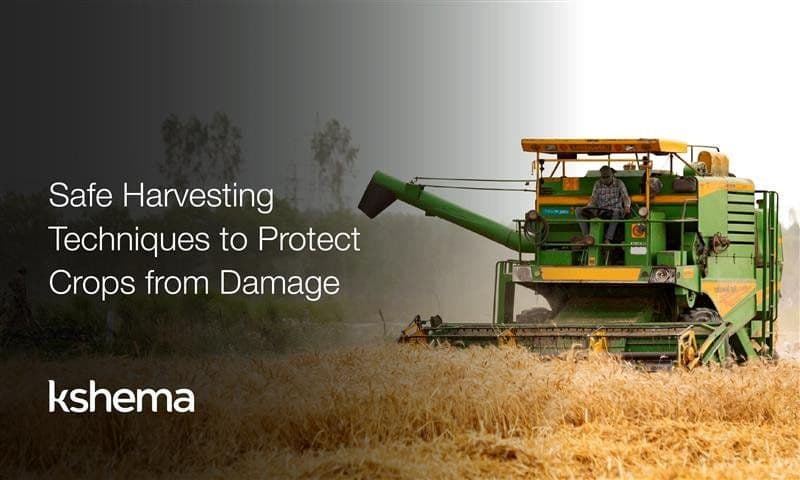
Farmers with large farms should use combine harvesters, which can cut, thresh, and clean grains in one operation, saving time and labour.
Farmers should harvest at the right maturity stage, use sharp tools, avoid over‑drying, and handle crops carefully to prevent losses.
Safe harvesting techniques reduces crop damage and preserves quality.
Yes, delayed harvesting can cause grain loss and spoilage.
Sharp sickles, gloves, and proper storage bins help avoid damage.
Farmers with large farms should use combine harvesters, which can cut, thresh, and clean grains in one operation, saving time and labour.
Farmers should harvest at the right maturity stage, use sharp tools, avoid over‑drying, and handle crops carefully to prevent losses.
Safe harvesting techniques reduces crop damage and preserves quality.
Yes, delayed harvesting can cause grain loss and spoilage.
“We do not assume any liability for any actions undertaken based on the information provided here. The information gathered from various sources and are displayed here for general guidance and does not constitute any professional advice or warranty of any kind.”
Crop Insurance