
Stay Updated with Our Latest Blogs
Subscribe to our blog and get the latest insurance tips, guides, and industry updates delivered to your inbox
Subscribe to our blog and get the latest insurance tips, guides, and industry updates delivered to your inbox
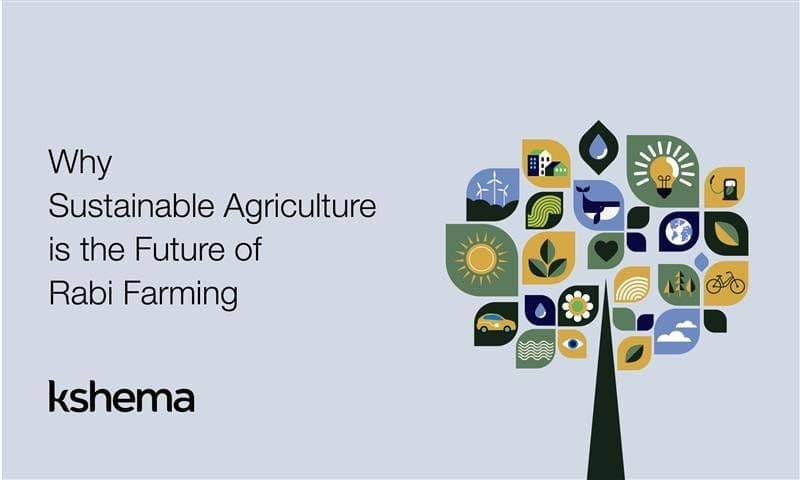
Sustainable agriculture helps Rabi farmers save water, protect soil and reduce input costs while improving productivity. With crops like wheat, mustard and peas needing careful water and soil management during winter, sustainable agriculture ensures long term soil health and stable yields. This guide shares simple, farmer friendly sustainable agriculture tips for the Rabi season that help farmers grow more with fewer inputs and build climate resilient fields. Learn how toprotect crops from climate risks with practical strategies.
Sustainable agriculture means growing crops in a way that protects soil, saves water and reduces chemical use while ensuring long-term productivity. It refers to farming methods that meet current food needs without compromising the ability of future generations to do the same. It emphasises soil health, water conservation, biodiversity, and reduced dependence on chemical inputs. For Rabi crops, which are heavily dependent on irrigation and soil fertility, adopting sustainable farming practices acts as a shield against unpredictable weather and resource constraints.
For Rabi farmers, sustainable agriculture is not just an environmental choice—it reduces expenses on fertilisers, increases soil strength and ensures crops survive winter stress. Farmers using sustainable methods often report lower costs and better-quality produce.
Key principles of sustainable agriculture include:
These principles align perfectly with the needs of Rabi farming, making sustainable agriculture not just desirable but essential.
Rabi crops like wheat and mustard depend heavily on irrigation. Excessive fertiliser use weakens soil, and over‑irrigation drops groundwater levels. Sustainable agriculture helps farmers reduce input costs, improve soil fertility and protect yields during climate variability.
By adopting sustainable agriculture, farmers can:
In short, sustainable agriculture transforms Rabi farming into a system that is profitable, eco-friendly, and future-ready.
Climate change has made Rabi farming unpredictable, with sudden temperature drops and unseasonal rainfall affecting crop health. Sustainable agriculture gives farmers greater control by improving soil structure, increasing water retention and reducing reliance on costly chemicals.
The environmental advantages of sustainable agriculture are profound, especially for Rabi crops:
These benefits ensure that Rabi farming remains viable even in the face of climate change.
For detailed weather updates and hailstorm alerts that impact Rabi crops, visit the Indian Meteorological Department official website.
Farmers often worry that sustainable agriculture might reduce yields. However, evidence shows that while initial transitions may require adjustments, long-term benefits outweigh short-term challenges. Reduced dependency on costly inputs, better soil productivity, and premium prices for organic produce can improve farm incomes.
Moreover, sustainable agriculture fosters community resilience. Shared water management, collective composting, and seed banks strengthen rural networks. For smallholders engaged in rabi farming practices, these collective approaches can be game-changers.
Farmers can rotate wheat with peas or chickpeas to naturally fix nitrogen. Using compost improves soil texture and water-holding capacity. Drip irrigation saves up to 40% water. Biopesticides help control pests without harming beneficial insects.
These farming tips not only improve yields but also ensure long-term sustainability.
Across India, several farmers have already embraced sustainable agriculture in their Rabi fields:
These success stories show that sustainable agriculture is practical, affordable and easy for small farmers to adopt. Even simple improvements, such as rotating crops or using compost, can make significant differences.
Government initiatives are increasingly promoting sustainable agriculture. Government Schemes encouraging organic farming, subsidies for micro-irrigation, and training programs for integrated pest management are helping farmers adopt eco-friendly methods. For Rabi farming, such support is crucial, as it ensures that farmers can transition without financial strain.
Sustainable agriculture will likely become the norm rather than the exception in the future. With consumer demand for healthier, chemical-free food rising, farmers practicing sustainable methods will enjoy better market opportunities. Moreover, as climate challenges intensify, only sustainable agriculture can safeguard the future of Rabi farming.
Rabi crops like wheat and mustard depend heavily on irrigation. Excessive fertiliser use weakens soil, and over‑irrigation drops groundwater levels. Sustainable agriculture helps farmers reduce input costs, improve soil fertility and protect yields during climate variability.
By adopting sustainable agriculture, farmers can:
In short, sustainable agriculture transforms Rabi farming into a system that is profitable, eco-friendly, and future-ready.
Climate change has made Rabi farming unpredictable, with sudden temperature drops and unseasonal rainfall affecting crop health. Sustainable agriculture gives farmers greater control by improving soil structure, increasing water retention and reducing reliance on costly chemicals.
The environmental advantages of sustainable agriculture are profound, especially for Rabi crops:
These benefits ensure that Rabi farming remains viable even in the face of climate change.
For detailed weather updates and hailstorm alerts that impact Rabi crops, visit the Indian Meteorological Department official website.
Farmers often worry that sustainable agriculture might reduce yields. However, evidence shows that while initial transitions may require adjustments, long-term benefits outweigh short-term challenges. Reduced dependency on costly inputs, better soil productivity, and premium prices for organic produce can improve farm incomes.
Moreover, sustainable agriculture fosters community resilience. Shared water management, collective composting, and seed banks strengthen rural networks. For smallholders engaged in rabi farming practices, these collective approaches can be game-changers.
Farmers can rotate wheat with peas or chickpeas to naturally fix nitrogen. Using compost improves soil texture and water-holding capacity. Drip irrigation saves up to 40% water. Biopesticides help control pests without harming beneficial insects.
These farming tips not only improve yields but also ensure long-term sustainability.
Across India, several farmers have already embraced sustainable agriculture in their Rabi fields:
These success stories show that sustainable agriculture is practical, affordable and easy for small farmers to adopt. Even simple improvements, such as rotating crops or using compost, can make significant differences.
Government initiatives are increasingly promoting sustainable agriculture. Government Schemes encouraging organic farming, subsidies for micro-irrigation, and training programs for integrated pest management are helping farmers adopt eco-friendly methods. For Rabi farming, such support is crucial, as it ensures that farmers can transition without financial strain.
Sustainable agriculture will likely become the norm rather than the exception in the future. With consumer demand for healthier, chemical-free food rising, farmers practicing sustainable methods will enjoy better market opportunities. Moreover, as climate challenges intensify, only sustainable agriculture can safeguard the future of Rabi farming.
Sustainable agriculture is the key to healthier soils, better water use and improved Rabi yields. By adopting simple practices like crop rotation, composting and micro-irrigation, farmers can lower costs and protect their crops from climate challenges. Sustainable agriculture not only strengthens fields but also ensures long-term food security and stable income. Farmers can also explore crop insurance options on the Kshema App to stay protected from weather risks during the Rabi season.
Eco-friendly farming using crop rotation, compost and water-saving irrigation.
Using drip irrigation, mulching and laser land levelling reduces water use.
Healthy soil improves moisture retention and strengthens winter crops.
Compost, green manure and biofertilisers reduce dependency on chemicals.
Yes, several schemes support organic farming inputs and water-saving technologies.
Eco-friendly farming using crop rotation, compost and water-saving irrigation.
Using drip irrigation, mulching and laser land levelling reduces water use.
Healthy soil improves moisture retention and strengthens winter crops.
Compost, green manure and biofertilisers reduce dependency on chemicals.
Yes, several schemes support organic farming inputs and water-saving technologies.
“We do not assume any liability for any actions undertaken based on the information provided here. The information gathered from various sources and are displayed here for general guidance and does not constitute any professional advice or warranty of any kind.”
Crop Insurance