
Stay Updated with Our Latest Blogs
Subscribe to our blog and get the latest insurance tips, guides, and industry updates delivered to your inbox
Subscribe to our blog and get the latest insurance tips, guides, and industry updates delivered to your inbox
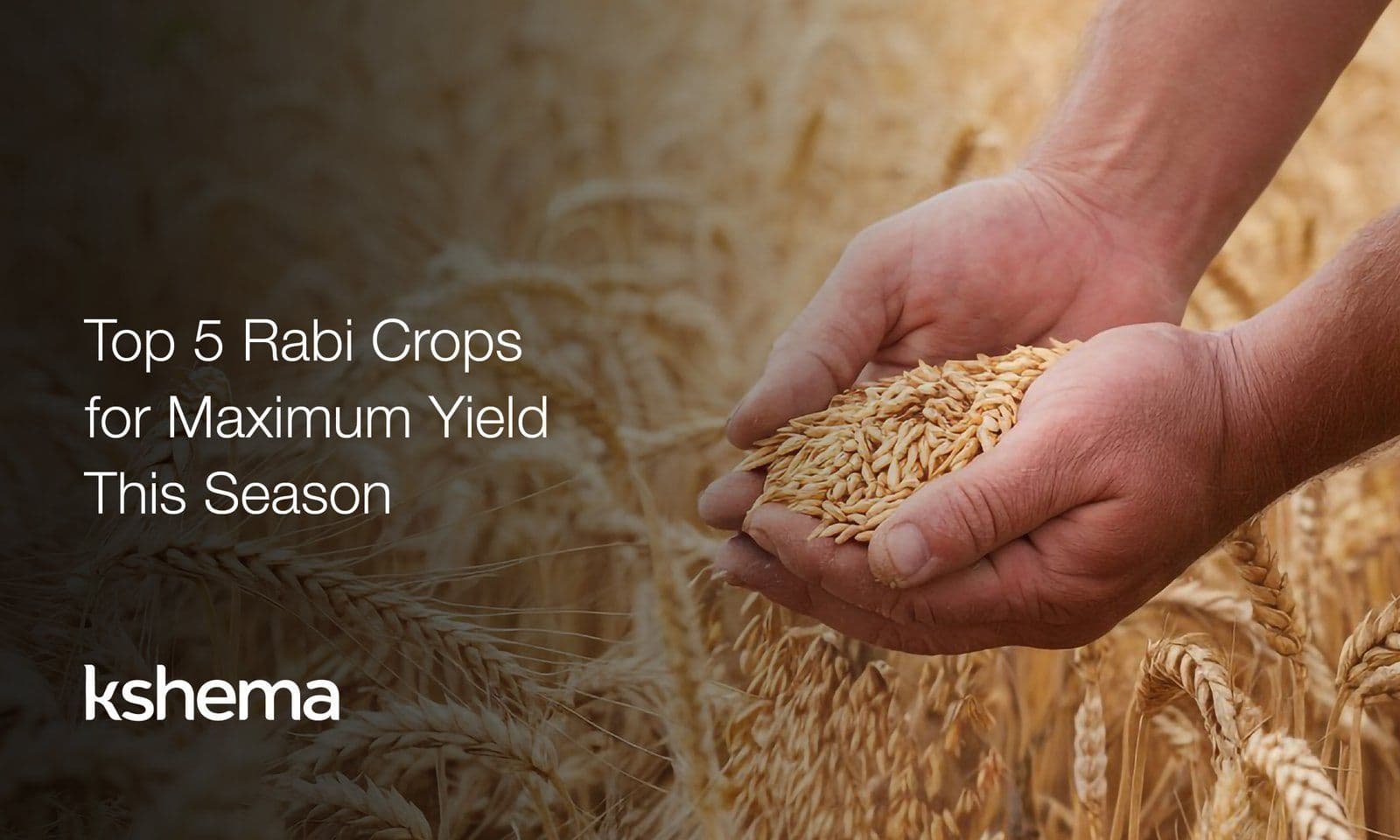
Rabi crops are winter-season crops grown after the monsoon, usually sown between October and December and harvested from February to April. Many farmers know the basics, but are unsure which Rabi crops give the best yield, highest profit or suit low-water conditions. This 2026 guide explains Rabi season months, crop examples and the top 5 best Rabi crops so farmers can plan sowing correctly and reduce risks.
Also read: Difference between Kharif and Rabi crops for a clear understanding before selecting your Rabi crop.
Note: months and water needs vary by region, sowing date, and variety.
Note: months and water needs vary by region, sowing date, and variety.
Rabi crops are crops that are sown in the cool, dry winter months after the monsoon has ended. Farmers usually sow Rabi crops between October and December and harvest them from March to April. These crops need lower temperatures during growth and depend more on irrigation than rainfall. Common examples of Rabi crops in India include wheat, mustard, gram, lentils, barley and peas. Understanding Rabi crops helps farmers plan their sowing calendar and avoid losses due to wrong timing.
Knowing the exact season months helps farmers avoid late sowing, which reduces yield and increases pest risk.
Common Rabi Crops Are:
These crops perform well in India’s winter climate and have strong domestic and export demand.
Rabi crops are crops that are sown in the cool, dry winter months after the monsoon has ended. Farmers usually sow Rabi crops between October and December and harvest them from March to April. These crops need lower temperatures during growth and depend more on irrigation than rainfall. Common examples of Rabi crops in India include wheat, mustard, gram, lentils, barley and peas. Understanding Rabi crops helps farmers plan their sowing calendar and avoid losses due to wrong timing.
Knowing the exact season months helps farmers avoid late sowing, which reduces yield and increases pest risk.
Common Rabi Crops Are:
These crops perform well in India’s winter climate and have strong domestic and export demand.
Wheat continues to reign supreme among best Rabi crops, thanks to its high yield and strong government procurement support. With an MSP of INR 2,425 per quintal and a production cost of INR 1,182, wheat offers more than 100% profit margin, making it a reliable choice for farmers.
Wheat is not just one of India’s major staple foods but also a pillar of India’s agricultural economy. Its adaptability to various soil types and consistent demand make it one of the best Rabi crops for maximum yield.
Farmers growing wheat can also explore Rabi crop insurance benefits to protect their income.
Mustard is a high-value oilseed crop that thrives in the Rabi season. With an MSP of INR 5,950 and a production cost of INR 3,011, mustard offers a 98% profit margin, making it one of the most lucrative options for farmers.
Mustard is used extensively in Indian households. Its short growing cycle and low water requirement makes it ideal for regions with limited irrigation facilities.
Red lentils are gaining popularity among farmers due to their dual benefits: high market demand and soil enrichment. With an MSP of INR 6,700 and production cost of INR 3,537, lentils offer an 89% profit margin.
Lentils fix nitrogen in the soil, improving fertility for future crops. Their nutritional value and export potential make them one of the best Rabi crops for sustainable farming.
Barley is a hardy crop that performs well in cooler climates and marginal soils. It’s used for food, animal feed, and malt production, making it a versatile choice for farmers.
Barley requires less water and is resistant to many pests and diseases. Its growing demand in the brewing and livestock industries adds to its profitability.
Chickpeas, also known as gram or chana, are staple pulses grown during the Rabi season. Rich in protein and fibre, they are in high demand both domestically and internationally.
Chickpeas are drought-tolerant and require minimal inputs, making them well-suited for regions with limited irrigation, including many rainfed areas. Their ability to improve soil health and provide nutritional security makes them one of the best Rabi crops for small and marginal farmers.
While not a traditional large-scale crop, green peas are a profitable vegetable crop during the Rabi season. They mature quickly (60–70 days) and fetch premium prices in urban markets.
Farmer Tip: Use proper staking and spacing to maximise yield. Harvest early for better market rates.
The best crop depends on your field conditions. Consider:
The Government of India plays a pivotal role in supporting Rabi crops through Minimum Support Prices (MSP), subsidies, and procurement schemes. Farmers are encouraged to:
These measures not only improve productivity but also ensure economic stability for farming households.
To further safeguard income, farmers should exploreperil-based crop insurance options that provide targeted protection against weather-related risks.
Plan your Rabi season smartly! Explore crop insurance benefits and soil health tips to secure maximum profit in 2026.
Wheat continues to reign supreme among best Rabi crops, thanks to its high yield and strong government procurement support. With an MSP of INR 2,425 per quintal and a production cost of INR 1,182, wheat offers more than 100% profit margin, making it a reliable choice for farmers.
Wheat is not just one of India’s major staple foods but also a pillar of India’s agricultural economy. Its adaptability to various soil types and consistent demand make it one of the best Rabi crops for maximum yield.
Farmers growing wheat can also explore Rabi crop insurance benefits to protect their income.
Mustard is a high-value oilseed crop that thrives in the Rabi season. With an MSP of INR 5,950 and a production cost of INR 3,011, mustard offers a 98% profit margin, making it one of the most lucrative options for farmers.
Mustard is used extensively in Indian households. Its short growing cycle and low water requirement makes it ideal for regions with limited irrigation facilities.
Red lentils are gaining popularity among farmers due to their dual benefits: high market demand and soil enrichment. With an MSP of INR 6,700 and production cost of INR 3,537, lentils offer an 89% profit margin.
Lentils fix nitrogen in the soil, improving fertility for future crops. Their nutritional value and export potential make them one of the best Rabi crops for sustainable farming.
Barley is a hardy crop that performs well in cooler climates and marginal soils. It’s used for food, animal feed, and malt production, making it a versatile choice for farmers.
Barley requires less water and is resistant to many pests and diseases. Its growing demand in the brewing and livestock industries adds to its profitability.
Chickpeas, also known as gram or chana, are staple pulses grown during the Rabi season. Rich in protein and fibre, they are in high demand both domestically and internationally.
Chickpeas are drought-tolerant and require minimal inputs, making them well-suited for regions with limited irrigation, including many rainfed areas. Their ability to improve soil health and provide nutritional security makes them one of the best Rabi crops for small and marginal farmers.
While not a traditional large-scale crop, green peas are a profitable vegetable crop during the Rabi season. They mature quickly (60–70 days) and fetch premium prices in urban markets.
Farmer Tip: Use proper staking and spacing to maximise yield. Harvest early for better market rates.
The best crop depends on your field conditions. Consider:
The Government of India plays a pivotal role in supporting Rabi crops through Minimum Support Prices (MSP), subsidies, and procurement schemes. Farmers are encouraged to:
These measures not only improve productivity but also ensure economic stability for farming households.
To further safeguard income, farmers should exploreperil-based crop insurance options that provide targeted protection against weather-related risks.
Plan your Rabi season smartly! Explore crop insurance benefits and soil health tips to secure maximum profit in 2026.
The Rabi season is a major opportunity for farmers to maximise yield and profit by choosing the right Rabi crops for their region, soil and water availability. By understanding Rabi crop examples, season months and choosing the right crops like wheat, mustard, lentils, barley and gram, farmers can improve both productivity and income. To protect this effort, farmers should also secure their fields with suitable crop insurance. Use the Kshema app to explore Rabi crop insurance options and safeguard your harvest for 2026.
Protect your Rabi crops with Kshema’s insurance plans.
Learn more: https://kshema.co/how-to-use-the-kshema-app-for-crop-insuranceand secure your harvest today.
Rabi crops are winter‑season crops sown after the monsoon and harvested before summer. They grow well in cool weather and need irrigation.
The Rabi season starts with sowing in October–November and ends with harvesting in March–April.
Common examples include wheat, mustard, barley, gram, peas, coriander, garlic and onion.
The best crops for 2026 include wheat, mustard, barley, gram and peas due to strong demand and stable yield.
Rabi crops help farmers earn steady income in winter, require fewer pesticides and give good market prices.
Rabi crops are winter‑season crops sown after the monsoon and harvested before summer. They grow well in cool weather and need irrigation.
The Rabi season starts with sowing in October–November and ends with harvesting in March–April.
Common examples include wheat, mustard, barley, gram, peas, coriander, garlic and onion.
The best crops for 2026 include wheat, mustard, barley, gram and peas due to strong demand and stable yield.
Rabi crops help farmers earn steady income in winter, require fewer pesticides and give good market prices.
Choosing the best Rabi crops helps farmers improve productivity, reduce risk and increase income. With planning, crop diversity and proper insurance, farmers can make the most of the 2026 Rabi season.
“We do not assume any liability for any actions undertaken based on the information provided here. The information gathered from various sources and are displayed here for general guidance and does not constitute any professional advice or warranty of any kind.”
Crop Insurance